Indeed chief economist says execs are ‘overestimating the speed’ of AI transformation in the labor market
Quick Take
AI transformation in the labor market is slower than executives expect but will have a significant impact.
Key Points
- Executives are overestimating AI's rapid impact.
- The labor shift is progressing at a slower pace.
- Future effects of AI will be more significant than anticipated.
📖 Reader Mode
~5 min readGood morning. AI may be dominating boardroom conversations, but a handful of giant employers are driving AI hiring in the U.S.
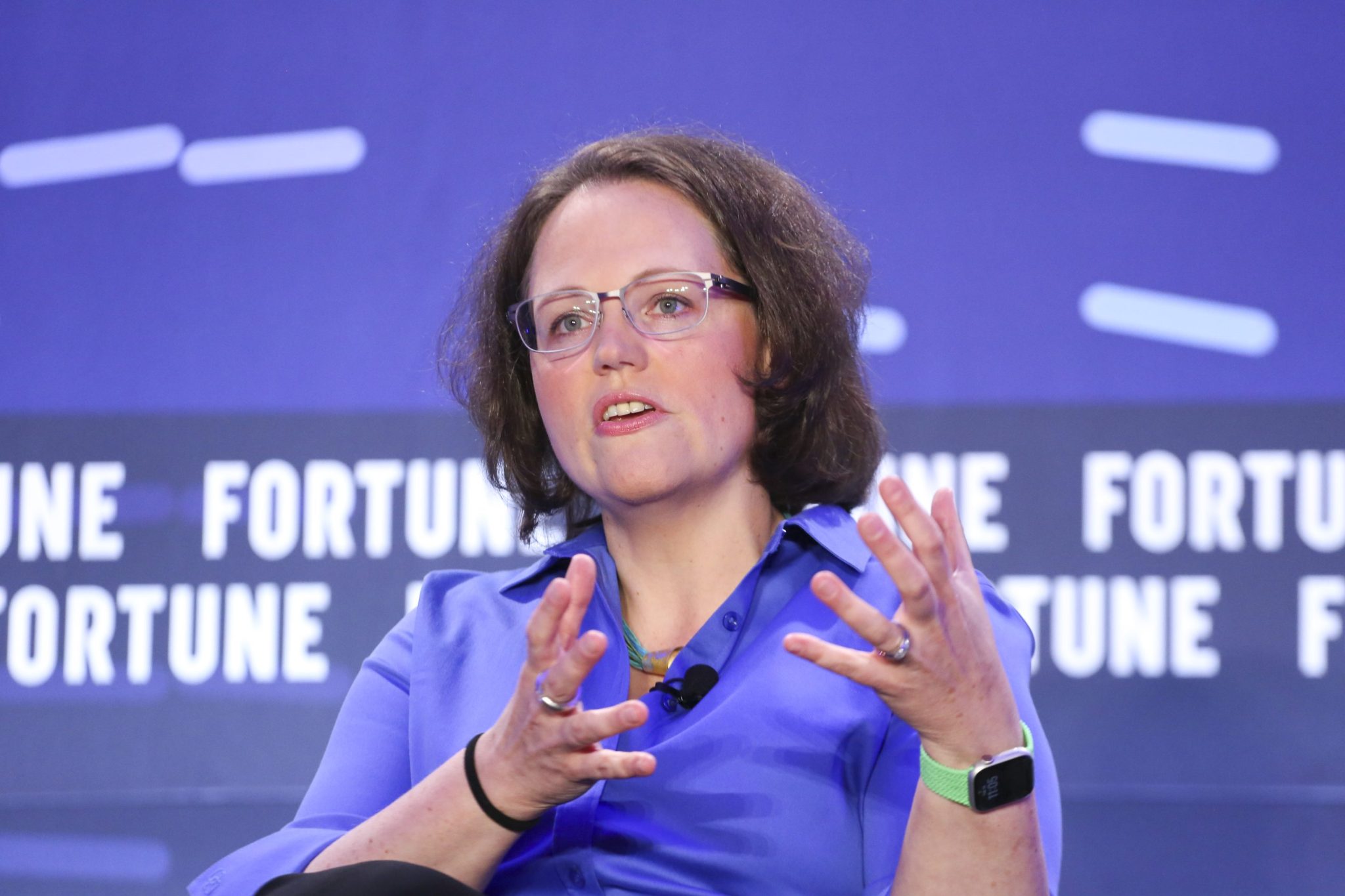
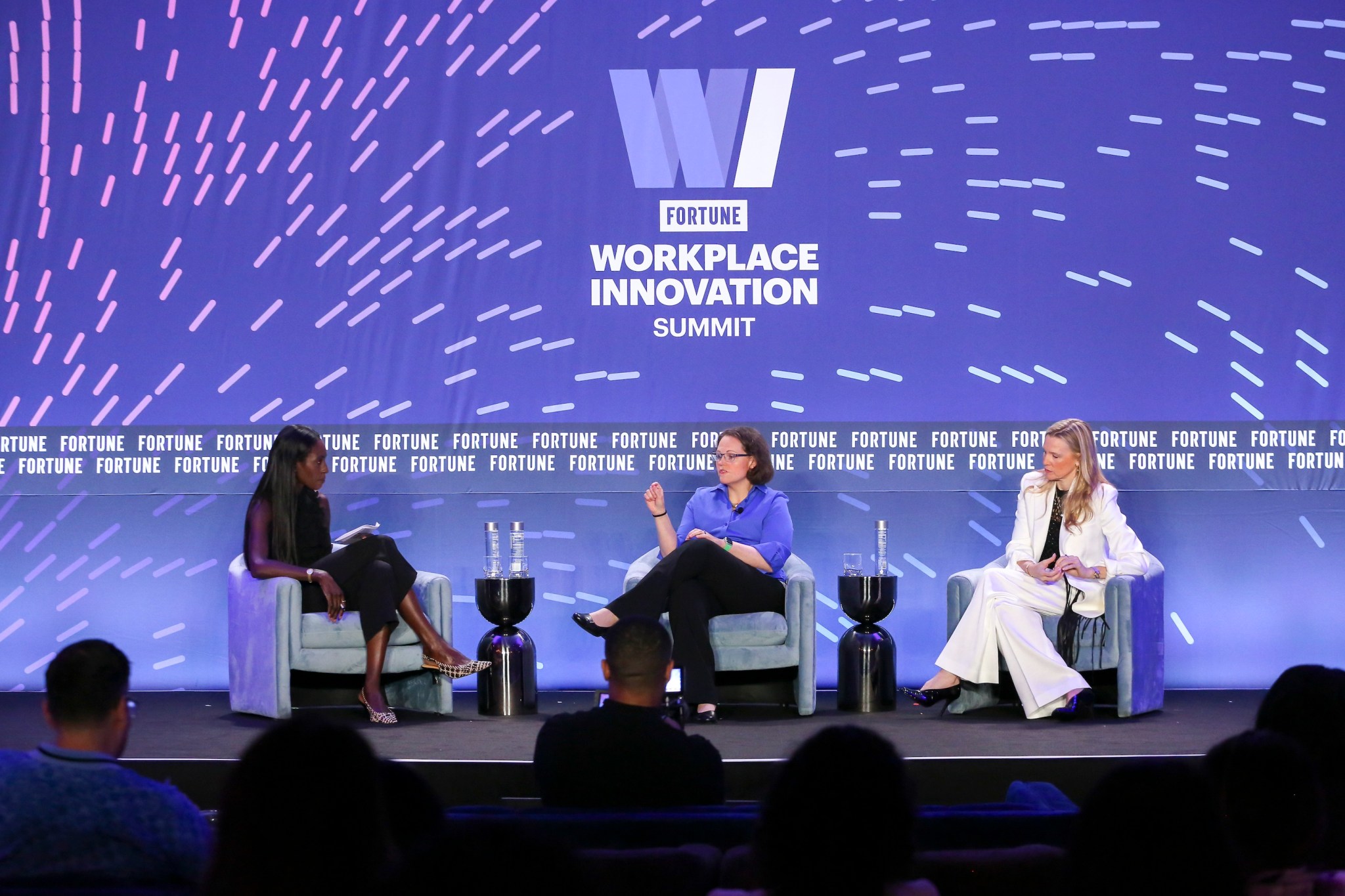
“I think we’re overestimating the speed at which we’re going to see this transformation,” Svenja Gudell, chief economist at Indeed, said on Tuesday to a room of executives during a panel session at the 2026 Fortune Workplace Innovation Summit in Atlanta about the pace of the labor market’s AI transformation. “I think we’re underestimating the long-term impact it will have.”
Gudell was responding to Fortune‘s Ruth Umoh, who pointed to Indeed’s Hiring Lab analysis of 2025 data. As of late 2025, 5.7% of U.S. firms had posted at least one AI-related job on Indeed, up from roughly 2% in 2018, and about 4% of all job postings mentioned AI at all, according to Indeed’s report released in January. Yet nearly 90% of those AI-related postings came from just 1% of companies, with adoption rates reaching 49.9% among the largest firms compared with only 1.3% among the smallest third. According to Indeed’s May 14 report, over 5% of job postings on the platform now mention AI, as of April 2026.
AI is going to significantly change the way we do things, “not tomorrow or the day after, but months and years into the future,” Gudell said. “I think it’s so important to have the data and to be able to act now to kind of kick off the things that you need to do in order to be set up for tomorrow,” she said, adding that while it’s a difficult task, it’s also really important. Gudell also said that the sectors most exposed to AI, are seeing growth in job demand.
AI hiring in the U.S. is currently concentrated among large technology companies, hyperscalers, and major consulting and professional-services firms, although adoption is gradually spreading to other sectors.
Becky Schmitt, chief people officer at PepsiCo, was also a panelist and provided a perspective on what it takes to keep the entire organization on the same page when it comes to AI transformation. Managing the reality that some parts of the organization move faster than others is something the company is working on internally right now, along with deciding which scalable pieces to invest in, Schmitt said.
Her recommendations on scaling? “The way that you make it scalable is by having standard processes, accepting common data sets, having core parts of your job that have, one job in one country and another be translatable, so then the technology can move,” Schmitt explained.
She added: “But if you want to let everybody have their own kingdom, you’re going to invest heavily in one part of the world, and then it can’t go someplace else.”
Sheryl Estrada
sheryl.estrada@fortune.com
Leaderboard
Fortune 500 Power Moves
Peter Griffith, CFO of Amgen (No. 134), who has served as the company's EVP and CFO since 2020, is retiring. Thomas Dittrich will return to Amgen as EVP on July 1 and succeed Griffith as CFO, effective Sept. 1. Dittrich, who previously held senior finance roles at Amgen, brings more than 30 years of experience. Most recently, he served as CFO of Galderma. Before that, he was the CFO at both Shire and Sulzer. Griffith will remain with the company into January 2027 for a transition period.
Every Friday morning, the weekly Fortune 500 Power Moves column tracks Fortune 500 company C-suite shifts—see the most recent edition.
More notable moves:
Ranjan Kalia was appointed CFO of Material Plus Holdings, LLC, a global strategy, consumer insights, and digital transformation consultancy that is part of the Blackstone portfolio. Kalia brings to the role more than 30 years of experience. Most recently, he was CFO at Brillio, and before that at Orion Innovation and Virtusa Corporation. Earlier in his career, Kalia held senior finance and operational leadership roles at EMC Corporation, General Electric Company, PepsiCo, Inc., and PricewaterhouseCoopers LLP.
Eric Lindquist was appointed CFO of Delphi Diagnostics. Lindquist brings decades of leadership experience across pharmaceutical and diagnostics companies. Most recently, he served as CEO of InnoSIGN. Before that, he was chief business and commercial officer at Celcuity. Earlier in his career, Lindquist held senior leadership roles at Natera.
Big Deal
KPMG and Anthropic announced on Tuesday a partnership to bring Anthropic’s AI assistant, Claude, into KPMG Digital Gateway, the firm’s client delivery platform. The rollout will start with tax and private equity clients, with broader use cases planned later.
The idea is to let clients build and run AI-driven workflows directly inside Digital Gateway rather than using separate tools. KPMG says the integration is aimed at helping teams automate routine work, analyze information more quickly, and streamline decision-making.
In the U.S., KPMG also plans to add Claude to products designed for private equity firms and their portfolio companies. The two companies say they’ll work together on additional AI tools built around Claude over time.
Going deeper
OneStream, an enterprise finance management platform, recently released data governance research that finds 96% of executives surveyed view accurate, trusted data as important to their organization's success, yet nearly half (47%) admit to making a material business decision based on faulty data in the past year.
At the OneStream Splash User Conference, the company released its Forward Finance: The New Operating Model for Intelligent Organizations. Forward Finance is built on five core dimensions: data steward, AI strategist, chief operator, IT collaborator, and workforce architect.
Overheard
"It's worth remembering that the freewheeling creative culture of San Francisco in the 1990s was the petri dish for an exceptionally rich crop of innovations."
—Jonathan Weber writes in a Fortune opinion piece titled "'Change the World' Idealism Is Dying in Silicon Valley. We'll Miss It When It's Gone." Weber is the author of the forthcoming book "City on the Edge: Technology, Politics and the Fight for the Soul of San Francisco." He has served as editor in chief of publications including the San Francisco Standard and the Industry Standard.
— Originally published at fortune.com