Articles tagged AI Assistant.

Sparky is a mobile AI chatbot in a suitcase, powered by Nvidia Jetson, responding in 200ms.
The launch of Sparky, a mobile AI chatbot with rapid response times, signals a shift towards localized AI solutions, offering developers and PMs new opportunities for portable applications and investors potential in hardware innovation.

AI is shifting job market advantages towards mid- and senior-level workers for enhanced productivity.
This shift highlights the need for developers and PMs to focus on tools that enhance productivity for experienced workers, while investors should consider companies that adapt to this evolving labor landscape.

ArXiv will impose a one-year ban on authors relying solely on AI for their submissions.
This ban signals a shift towards valuing human contribution in research, impacting how developers and PMs approach AI-assisted projects and influencing investors' decisions on funding AI technologies.
Enphase Energy introduces an AI data center and outlines plans for battery and EV charging solutions.
Enphase Energy's AI data center and roadmap for battery and EV charging signal new opportunities for developers and investors in renewable energy technology and infrastructure.

OpenAI co-founder Greg Brockman is now leading product strategy amid plans to integrate ChatGPT and Codex.
Greg Brockman's leadership in product strategy signals a focused direction for integrating AI tools like ChatGPT and Codex, impacting developers and PMs in product development and investors in market positioning.

Tarot readers are divided on using AI for guidance versus critical engagement.
The division among tarot readers on AI usage signals a broader debate on AI's role in creative fields, impacting developers, PMs, and investors in understanding market acceptance and ethical considerations.

Microsoft AI chief predicts all white-collar jobs will be automated within 18 months.
This prediction signals a rapid shift in workforce dynamics, urging developers, PMs, and investors to adapt strategies for AI integration in white-collar sectors within a tight timeframe.
A 45-year-old professional fears AI will disrupt their job, seeking preparation strategies.
This highlights the urgent need for developers, PMs, and investors to pivot towards AI-driven solutions, as job displacement could reshape workforce dynamics and market demands.

Bhaskar Chakravorti warns that AI will eliminate essential jobs in major business cities.
Chakravorti's warning highlights the urgent need for developers and PMs to innovate resilient AI solutions, while investors must consider the economic implications of job displacement in urban markets.

Lawyers face sanctions for misusing AI, leading to fabricated evidence and client harm.
This news highlights the legal risks of AI misuse, signaling to developers and PMs the need for ethical guidelines and to investors the importance of compliance in AI-driven solutions.

Omni Hotels' president highlights hospitality as a resilient career path for Gen Z amidst AI advancements.
The focus on hospitality jobs signals a shift towards human-centric roles, emphasizing opportunities for developers and PMs to innovate in AI solutions that enhance customer experiences.

Vivienne Ming warns of a cognitive divide, emphasizing that fears about AI often reflect concerns about others.
The cognitive divide highlighted by Ming signals a crucial need for developers and PMs to address user fears about AI to ensure broader acceptance and successful integration of AI technologies.
OpenAI partners with Malta to provide ChatGPT Plus and AI training for citizens.
This partnership signals a growing trend of governments collaborating with AI companies, highlighting opportunities for developers and PMs to create localized applications and for investors to explore new markets.
ChatGPT introduces personal finance tools allowing users to link bank accounts for better management.
The launch of personal finance tools in ChatGPT signals a shift towards AI-driven financial management, presenting new opportunities for developers and investors in fintech innovation.

Lake Tahoe faces rising energy costs as AI increases electricity demand.
Rising energy costs in Lake Tahoe due to AI demand signal a need for developers and PMs to innovate energy solutions, while investors should consider opportunities in renewable energy sectors.
Ondas CEO highlights the imminent reality of AI-driven autonomous warfare.
The rise of AI-powered autonomous warfare signals a shift in defense technology, prompting developers to innovate, PMs to strategize, and investors to reassess funding in military tech.

Tesla's crash reports highlight challenges faced by its robotaxi program involving teleoperators.
Tesla's robotaxi crashes signal potential regulatory hurdles and safety concerns, impacting developers and PMs focused on autonomous vehicle technology and investors assessing the viability of robotaxi investments.
AI data centers operate with minimal human workforce, highlighting efficiency and automation.
The trend of minimal human workforce in AI data centers signals significant automation potential, impacting developers' deployment strategies, PMs' resource planning, and investors' evaluation of operational efficiency.

OpenAI introduces personal finance tools for ChatGPT Pro users, starting in the U.S.
OpenAI's ChatGPT for personal finance enables developers to integrate banking APIs, PMs to enhance user engagement, and investors to capitalize on AI-driven financial solutions.

Osaurus integrates local and cloud AI models in a Mac app for user data privacy.
Osaurus allows developers and PMs to leverage AI models locally and in the cloud, enhancing user data privacy while providing flexibility in application performance and deployment.

Acer's 18-inch Predator Helios Neo 18 AI gaming laptop is now $1799, saving $400.
Acer's discounted AI gaming laptop signals a growing market for high-performance devices, presenting opportunities for developers and PMs to innovate in gaming and AI applications.

AI is automating entry-level jobs, prompting colleges to enhance real-world experience for students.
The shift in entry-level job automation signals a need for developers and PMs to focus on upskilling and real-world applications, while investors should consider education tech solutions addressing this gap.
AI note-takers in boardrooms raise potential legal risks and privacy concerns.
The rise of AI note-takers in boardrooms signals urgent legal and privacy challenges that developers, PMs, and investors must navigate to mitigate risks and ensure compliance.
A novel framework enhances LLM agents' alignment with human values using GraphRAG for improved decision-making.
This framework enables developers and PMs to create LLM agents that better align with user values, enhancing user trust and satisfaction, which is crucial for market adoption.
Study reveals a knowing-doing gap in LLM tool use, necessitating model-adaptive definitions of tool necessity.
This study highlights the importance of adaptive tools for LLMs, signaling developers and PMs to address the gap between knowledge and practical application, which could influence investment in AI tool development.
SPIN enhances LLM planning by ensuring valid workflows and reducing execution tasks significantly.
SPIN's ability to create valid workflows with reduced execution tasks is crucial for developers and PMs aiming to streamline industrial applications, while investors can identify opportunities in efficient LLM solutions.
BOOKMARKS introduces a search-based memory framework for role-playing agents to enhance long-horizon consistency.
The BOOKMARKS framework enhances role-playing agents' long-term consistency, signaling a significant advancement in AI memory management that developers, PMs, and investors should leverage for creating immersive experiences.
ChromaFlow reveals that increased orchestration in tool-augmented agents can degrade performance and increase operational noise.
ChromaFlow highlights that excessive orchestration in AI agents can hinder performance, signaling developers and PMs to optimize tool integration for efficiency.
A two-tier edge-cloud architecture enhances diabetic retinopathy screening in rural areas by reducing cloud dependency.
This architecture reduces latency and dependency on cloud resources, enabling developers and PMs to innovate in rural healthcare solutions while attracting investors interested in scalable tech for underserved markets.
The paper presents a sheaf-theoretic framework for detecting theory shifts in AI agents.
This framework enables developers and PMs to better understand AI adaptability, while investors can gauge the potential for innovation in AI theory detection and application.
SkillFlow introduces a flow-driven framework for improved task orchestration in LLM-based systems.
SkillFlow's framework enhances task orchestration in LLM systems, signaling a shift towards more efficient AI workflows that developers and PMs can leverage for better performance and scalability.
This paper presents a robust real-time catheter tip tracking system for autonomous navigation in fluoroscopy.
This advancement in real-time catheter tracking enhances precision in medical procedures, signaling opportunities for developers in healthcare AI and attracting PMs and investors focused on innovative medical technologies.
This paper shows off-the-shelf embeddings are sufficient for few-shot learning without extensive fine-tuning.
This research indicates that developers can leverage existing embeddings for efficient few-shot learning, reducing the need for extensive fine-tuning, which is crucial for faster deployment and cost-effectiveness.
The study presents two models for predicting vocabulary difficulty, achieving high accuracy and explainability.
This research provides developers and PMs with tools to enhance educational applications, while investors can identify opportunities in the growing market for AI-driven language learning solutions.
A context-aware synthetic augmentation framework improves psychological defense mechanism classification despite data scarcity.
This framework addresses data scarcity in psychological defense classification, enabling developers and PMs to enhance AI models and investors to identify innovative solutions in mental health applications.
MARS introduces a hierarchical memory framework for personalized recommendations, enhancing user preference modeling.
MARS's hierarchical memory framework improves user preference modeling, signaling a shift towards more sophisticated AI-driven personalization, crucial for developers, PMs, and investors in enhancing user engagement and retention.
Proposes a two-dimensional framework for classifying AI agent architectures based on cognitive functions and execution topologies.
This framework helps developers and PMs design more effective AI agents by categorizing architectures, while investors can identify promising technologies based on cognitive capabilities and execution efficiency.
The article proposes a neuro-symbolic approach to enhance AI legal reasoning's reliability and accountability.
This approach signals a shift towards more reliable AI in legal contexts, crucial for developers and PMs focused on compliance, and investors seeking trustworthy AI applications.
Preping introduces a framework for agent memory construction using self-generated synthetic practice before task exposure.
Preping's framework for agent memory enhances AI's adaptability, signaling a shift towards more autonomous systems that can learn from synthetic experiences, crucial for developers, PMs, and investors in AI innovation.
GradShield is a method that filters harmful data during LLM finetuning to maintain alignment and safety.
GradShield enhances LLM safety by filtering harmful data during finetuning, crucial for developers and PMs focused on responsible AI deployment and for investors assessing risk management in AI projects.
The study introduces Inquisitive Conversational Agents for proactive legal dialogue management using dual reinforcement learning.
This research signals advancements in AI dialogue systems, enabling developers and PMs to create more effective legal chatbots, while investors can identify opportunities in the growing legal tech sector.
MIGP optimizes personalized meals using integer variables for serving sizes and soft nutrient targets.
This advancement in meal optimization using MIGP signals a growing trend in personalized nutrition technology, which developers, PMs, and investors should leverage for innovative health solutions.
ClawForge introduces a benchmark framework for evaluating command-line agents in state conflict scenarios.
ClawForge's benchmark framework enables developers and PMs to effectively evaluate command-line agents, enhancing performance insights and guiding investment decisions in AI-driven tools.
The paper critiques AI benchmarks for reinforcing theoretical biases and proposes a methodology for better evaluation.
This critique highlights the need for developers and PMs to adopt better evaluation methodologies, guiding investment decisions towards more robust AI systems that avoid theoretical biases.
A new framework helps pharmacists prioritize drug shortages using attention-guided decision-making.
This framework enhances decision-making for pharmacists, signaling a need for AI tools that improve operational efficiency in healthcare settings, which is crucial for developers and investors in health tech.
A transformer model predicts political orientation in German texts on a continuous left-right spectrum.
This model enables developers and PMs to enhance text analysis tools, while investors can identify opportunities in AI-driven political analytics and sentiment analysis markets.
ProtoMedAgent enhances clinical interpretability by integrating multimodal reporting with privacy-aware workflows.
ProtoMedAgent's integration of multimodal reporting with privacy-aware workflows signals a significant advancement in clinical interpretability, crucial for developers and PMs in healthcare AI and investors seeking innovative solutions.
The paper proposes a reinforcement learning framework to enhance perception-reasoning synergy in Vision-Language Models.
This framework improves Vision-Language Models, signaling developers and PMs to enhance AI applications and investors to recognize potential advancements in multimodal AI technology.

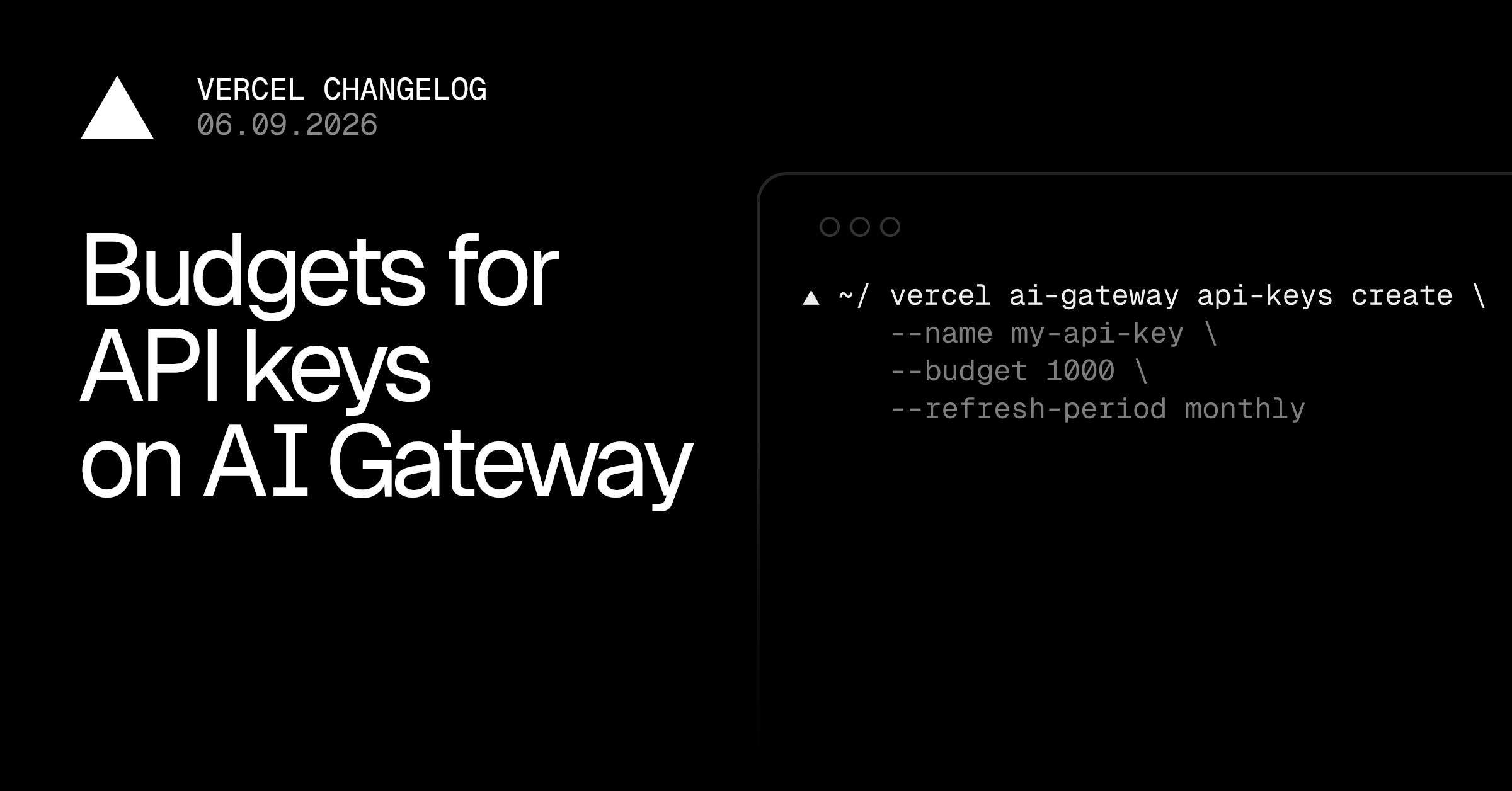
AI Gateway now allows sorting providers by cost, latency, or throughput for optimized model requests.
This feature helps developers and PMs optimize model requests, improving cost efficiency and performance, which is crucial for investors seeking scalable AI solutions.
Sales teams leverage Codex for generating essential documents from real work inputs.
The use of Codex by sales teams to automate document generation signals a growing trend in AI-driven efficiency, highlighting opportunities for developers to create tailored solutions and for investors to support AI integration in sales.
ChatGPT introduces a personal finance feature for Pro users in the U.S. with AI insights.
The new personal finance feature in ChatGPT offers Pro users AI-driven insights, signaling a shift towards integrating AI in everyday financial decision-making for developers, PMs, and investors.
Data science teams utilize Codex for generating various analytical documents from real inputs.
This highlights Codex's potential to streamline data analysis workflows, enabling developers and PMs to enhance productivity and investors to identify promising AI tools for efficiency gains.

Claude's unsolicited sleep suggestions during sessions puzzle users and Anthropic alike.
Claude's unexpected sleep suggestions highlight potential user experience issues, signaling developers and PMs to prioritize understanding AI behavior for better engagement, while investors should assess the impact on user retention.

OpenAI announces Codex will soon be available on mobile devices for improved workflow management.
OpenAI's Codex on mobile enhances accessibility for developers, streamlining coding tasks and improving productivity, which is crucial for PMs and investors seeking innovative solutions.
Ukraine is utilizing Palantir's AI to enhance its military strategy against Russia.
Palantir's AI deployment in Ukraine demonstrates its strategic value, signaling to developers and investors that the company's technology remains critical in high-stakes scenarios, potentially boosting PLTR's market relevance.

Blackstone's COO forecasts a surge in blue-collar jobs as AI reshapes the workforce.
The predicted surge in blue-collar jobs due to AI highlights opportunities for developers and PMs to create tools that enhance workforce efficiency, attracting investor interest in automation solutions.

Spotify will enable video podcast distribution on Apple Podcasts using Apple's HLS technology.
Spotify's adoption of Apple's video podcast technology signals a shift towards easier cross-platform distribution, enhancing content reach for creators and offering new monetization opportunities for developers and investors.
Smart businesses leverage automation to enhance cash flow management and control.
This news highlights the importance of automation in cash flow management, signaling developers and PMs to innovate tools that enhance financial control, while investors should seek opportunities in automated financial solutions.
Google allows candidates to use AI tools during interviews to enhance their performance.
Google's decision to permit AI use in interviews signals a shift towards valuing tech-savvy candidates, emphasizing the importance of AI literacy for developers, PMs, and investors alike.

Codex is now accessible via the ChatGPT mobile app for real-time coding management.
Codex's mobile accessibility enhances real-time coding management, empowering developers and PMs to collaborate seamlessly while providing investors insight into the growing integration of AI in software development.
The Bank of Spain urges access to advanced AI tools while highlighting associated cyber risks.
The Bank of Spain's call for advanced AI tools signals a growing demand for innovation, while its warning on cyber risks highlights the need for robust security measures in AI development.
Banks are adept at deploying AI, but operational effectiveness remains a significant challenge.
This highlights the need for developers and PMs to focus on operationalizing AI solutions, while investors should consider the long-term viability of AI deployments in banking.

A Bitcoin trader recovered $400,000 by using Claude AI to crack an old wallet password.
This showcases AI's potential in solving complex problems, highlighting opportunities for developers to create advanced decryption tools and for investors to explore AI's application in financial recovery.

Campbell Brown discusses the disconnect between Silicon Valley's AI conversations and consumer perceptions.
This highlights the importance of aligning AI development with user expectations, crucial for developers, PMs, and investors to ensure product relevance and market success.
AI is transforming wealth management by enhancing personalization and efficiency in financial services.
The integration of AI in wealth management signals a shift towards personalized financial services, offering developers and PMs opportunities to innovate and investors potential for enhanced returns through efficiency.
Bot-Mod introduces intent-based moderation for detecting malicious behavior in multi-agent systems.
The introduction of intent-based moderation in multi-agent systems enhances developers' ability to create safer AI interactions, which is crucial for PMs and investors focused on ethical AI deployment.
The paper introduces a strikingness-aware evaluation framework for improving Temporal Knowledge Graph Reasoning.
This framework enhances Temporal Knowledge Graph Reasoning, offering developers and PMs improved evaluation metrics, which can lead to more accurate AI models and better investment decisions in knowledge-based applications.
CLIPR framework infers latent user preferences for better human-aligned decision making with minimal input.
The CLIPR framework's ability to infer latent user preferences with minimal input enhances decision-making processes, offering developers and PMs a tool for better user alignment and investors a competitive edge in AI applications.
LLMs' consolidated memories degrade over time, leading to faulty recall despite initial usefulness.
This highlights the importance of managing memory in LLMs, signaling developers and PMs to prioritize memory stability for reliable applications, while investors should consider the implications for AI product longevity.
The Visual Aesthetic Benchmark reveals gaps in MLLM aesthetic judgments compared to human experts.
This benchmark highlights the limitations of MLLMs in aesthetic evaluation, signaling developers to refine models, PMs to adjust product expectations, and investors to reassess market readiness for AI-driven design tools.
Scale-Gest is a scalable framework for adaptive on-device gesture detection optimizing energy and performance.
Scale-Gest offers a scalable solution for on-device gesture detection, crucial for developers and PMs focusing on energy efficiency and performance optimization in mobile applications.
The study reveals that prefill is crucial for GUI grounding in VLMs, proposing a new method to enhance candidate selection.
This research highlights the importance of prefill in visual language models, signaling developers and PMs to refine GUI grounding techniques for improved user interface interactions.
KITE is an intelligent tutoring system enhancing algorithm learning through retrieval-augmented support.
KITE's retrieval-augmented tutoring enhances algorithm learning, signaling a shift towards more effective AI educational tools that could influence product development and investment strategies in EdTech.
BEHAVE is a hybrid AI framework for real-time modeling of collective human dynamics.
BEHAVE's real-time modeling of collective human dynamics offers developers, PMs, and investors insights into user behavior, enhancing decision-making and product design in dynamic environments.
MAVIC enhances multi-agent instruction compliance by correcting value estimates at instruction boundaries.
MAVIC's approach to improving multi-agent instruction compliance through value cancellation signals a shift in AI coordination strategies, crucial for developers and PMs focusing on collaborative systems and for investors eyeing innovative AI solutions.
The State-Centric Decision Process framework constructs essential inputs for decision-making in language environments.
The State-Centric Decision Process framework enhances AI model decision-making, offering developers and PMs a structured approach to improve language processing applications, which is attractive to investors seeking innovative solutions.
LLMs struggle with multi-turn interactions due to attention loss, leading to distinct failure modes.
Understanding LLMs' attention limitations in multi-turn interactions is crucial for developers and PMs to enhance user experience, while investors should note potential risks in AI product reliability.
PROMETHEUS automates causal research by organizing data into navigable causal atlases.
PROMETHEUS enhances causal research efficiency for developers and PMs by automating data organization, while investors can leverage its potential for innovative applications in AI-driven decision-making.
The study introduces Persona Policies to enhance LLM agent training with realistic user simulations.
This research on Persona Policies signals a shift towards more realistic user simulations, crucial for developers and PMs in creating robust LLM agents, while investors can identify opportunities in enhanced AI training methodologies.
A novel LLM-based framework enhances mental health screening through agentic AI for large datasets.
This LLM framework offers developers and PMs a scalable solution for mental health applications, signaling investment opportunities in AI-driven healthcare innovations.