DeepSignal tracks AI news from research labs, model companies, developer tools, AI infrastructure, robotics and policy sources. This page updates daily with curated AI signals.
Latest
All recent AI updates, continuously refreshed.
Want this in your inbox every morning?
Daily brief at your local 8am — bilingual EN/中文, free.

1w ago
A guide to slash commands in the GitHub Copilot app
AI Summary
The GitHub Copilot app enhances productivity with slash commands, allowing users to manage sessions, navigate projects, and customize workflows efficiently. Commands like /plan and /spar facilitate task breakdown and idea validation, streamlining the coding process.
Why Featured
The introduction of slash commands in the GitHub Copilot app enhances workflow efficiency by allowing users to manage sessions and customize their coding environment. This development signals a shift towards more integrated and user-friendly tools, which can improve productivity for builders and project managers, while also attracting investor interest in AI-driven development solutions.

1w ago
FeaturedOriginal
Securing AI agents with temporal policies in Amazon Bedrock AgentCore
AI Summary
Amazon Bedrock AgentCore introduces temporal policies to enhance AI agent security by enforcing stateful authorization rules based on an agent's action history, preventing issues like incorrect data handling and unauthorized actions. These policies operate at the gateway level, ensuring agents cannot bypass them, thus maintaining integrity and compliance in AI workflows.
Why Featured
The introduction of temporal policies in Amazon Bedrock AgentCore enhances AI agent security by enforcing stateful authorization rules, which is crucial for builders and PMs focused on compliance and data integrity. For investors, this development signals a stronger commitment to secure AI solutions, potentially reducing risks associated with data mishandling and unauthorized actions.

1w ago
FeaturedOriginal
OpenAI improves GPT-5.6 Sol in ChatGPT and restricts free users to its weakest model
AI Summary
OpenAI has enhanced GPT-5.6 Sol for Plus and Pro users, offering a response depth slider, while free users will be limited to the less capable GPT-5.6 Luna. The new models show improved factual accuracy, with error rates dropping 62% for Luna and 68% for Sol compared to GPT-5.5 Instant.
Why Featured
OpenAI's enhancement of GPT-5.6 Sol for Plus and Pro users, along with the introduction of a response depth slider, signals a shift towards more tailored AI experiences, which could drive demand for premium subscriptions. This development also highlights the importance of investing in higher-quality AI models, as improved factual accuracy can significantly enhance user engagement and satisfaction.

1w ago
FeaturedOriginal
Deepmind's talent drain likely comes down to chip shortages, a conflict of interest, and Google's bureaucracy
AI Summary
DeepMind faces a talent drain due to chip shortages, internal bureaucracy, and a conflict of interest as Google sells TPU chips to competitors. CEO Demis Hassabis has stepped back, leading to frustrations among researchers over limited access to resources.
Why Featured
DeepMind's talent drain, driven by chip shortages and internal bureaucracy, signals a potential slowdown in AI innovation and research output. Builders and PMs should be aware that resource constraints could hinder project timelines, while investors need to consider how these challenges might impact the long-term viability of AI startups reliant on similar technologies.
1w ago
FeaturedOriginal
Configure rate limits for AI traffic on AgentCore gateway
AI Summary
AWS announces rate limiting for the Amazon Bedrock AgentCore gateway, enabling fine-grained control over AI traffic management. Users can define OAuth or IAM-based rules for requests, connections, and token throughput, ensuring service availability during traffic spikes. This feature supports various target types, including servers and inference models, enhancing performance and security for different user groups.
Why Featured
AWS's introduction of rate limiting for the Amazon Bedrock AgentCore gateway allows builders and PMs to manage AI traffic more effectively, ensuring consistent service availability during high demand. This development is crucial for investors as it enhances the reliability and scalability of AI applications, potentially leading to better user experiences and increased adoption.

1w ago
FeaturedOriginal
Bumble teases a swipe-free future as it doubles down on IRL meetups
AI Summary
Bumble is shifting towards in-person meetups with its new app, Plans, aimed at Gen Z, as it phases out the swipe model. CEO Whitney Wolfe Herd reported promising early results and emphasized a future focused on intentional interactions rather than rapid swiping, while also integrating AI tools to enhance user experience.
Why Featured
Bumble's introduction of the Plans app marks a significant shift from the traditional swipe model to a focus on in-person interactions, indicating a potential trend in the dating app industry towards more meaningful connections. For builders and PMs, this highlights the importance of user experience and engagement features, while investors should consider the implications for user retention and market differentiation in a crowded space.

1w ago
FeaturedOriginal
Microsoft's AI revenue reportedly depends on OpenAI for 70 percent
AI Summary
Microsoft's AI revenue heavily relies on OpenAI, accounting for 70% of its $24.1 billion AI earnings in FY ending June 2026. CEO Satya Nadella projected annual AI revenue could exceed $37 billion, highlighting a shift towards open-weight models despite past vendor lock-in strategies.
Why Featured
Microsoft's reliance on OpenAI for 70% of its AI revenue signals a critical shift towards open-weight models, which may influence builders and PMs to prioritize interoperability in their AI solutions. For investors, this highlights the potential for significant growth in AI markets, emphasizing the importance of partnerships with leading AI providers like OpenAI.

1w ago
FeaturedOriginal
ChatGPT brings unlimited text chats to free users
AI Summary
OpenAI has announced the removal of text chat limits for all ChatGPT users, introducing the new GPT-5.6 Luna model, which will enhance reasoning capabilities. Plus and Pro users will benefit from the upgraded GPT-5.6 Sol model, showing significant reductions in factual errors by 62% and 68%, respectively.
Why Featured
The introduction of unlimited text chats for free users with the GPT-5.6 Luna model enhances accessibility and user engagement, which can drive broader adoption of AI tools. For builders and PMs, this means an opportunity to integrate more advanced AI capabilities into their products, while investors should note the potential for increased market share and user retention for OpenAI's offerings.
1w ago
FeaturedOriginal
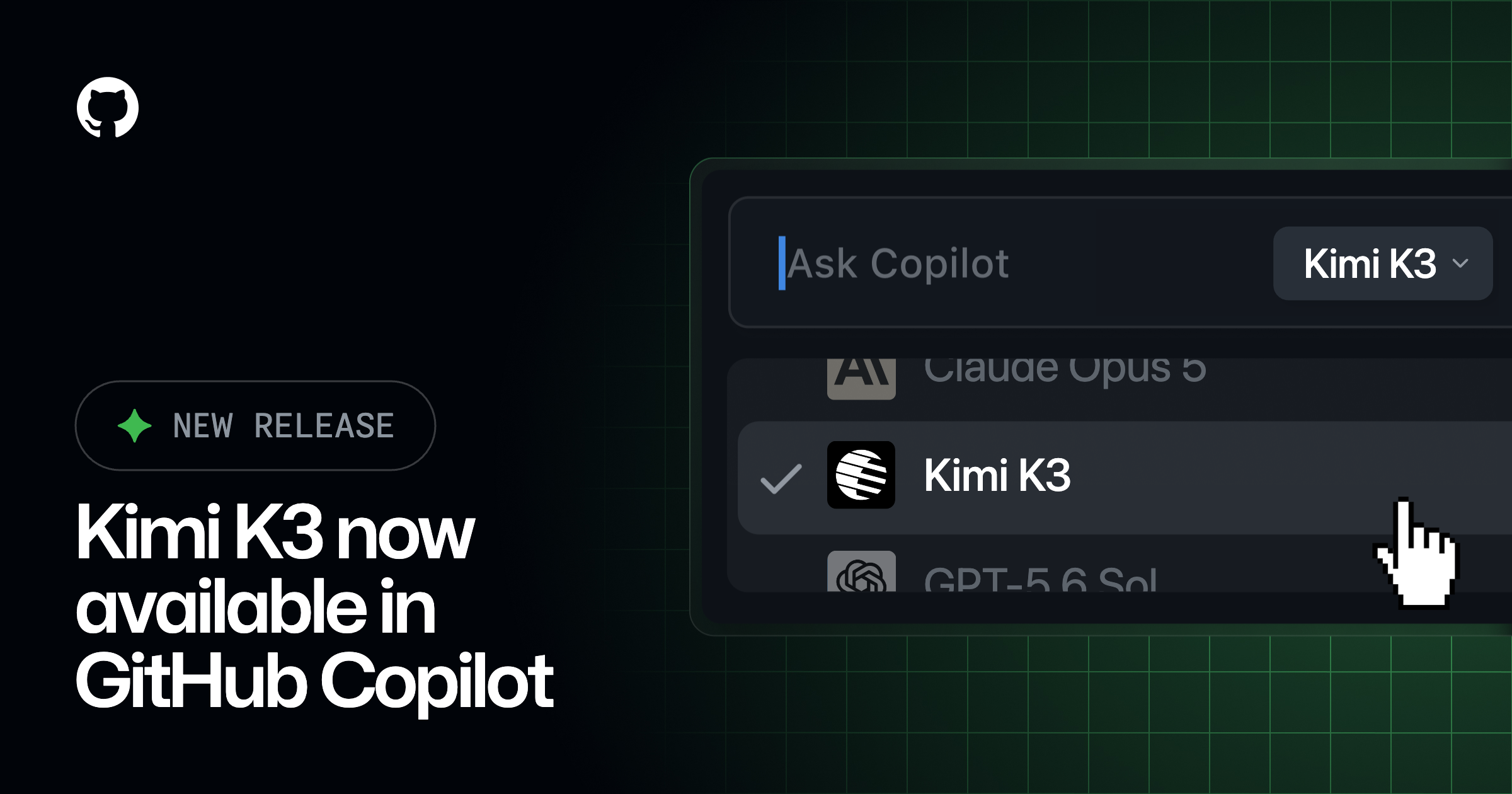
Kimi K3 is now available in GitHub Copilot
AI Summary
Kimi K3, an , is now available in GitHub Copilot, offering advanced coding capabilities at competitive pricing. It is accessible across various platforms including Visual Studio Code and Jetbrains, but requires activation for Copilot Business and Enterprise users.
Why Featured
The integration of Kimi K3 into GitHub Copilot enhances coding capabilities for developers, allowing for more efficient and cost-effective software development. Builders and PMs should consider this as a significant tool for improving productivity, while investors may see potential in the competitive edge it provides to teams utilizing advanced AI coding assistance.

1w ago
FeaturedOriginal
Naïve raises $28.5M to automate the grunt work of setting up and running a company
AI Summary
Naïve has raised $28.5M in Series A funding to automate business setup and operations using AI, attracting over 30,000 developers. Their infrastructure allows AI agents to handle tasks like LLC formation, email setup, and payment processing, while optimizing costs with serverless runtimes and model routing.
Why Featured
Naïve's $28.5M funding round signifies a growing demand for AI-driven automation in business operations, which could streamline processes for startups and reduce operational overhead. For builders and PMs, this means potential integration of such tools into their workflows, while investors should note the scalability of solutions targeting foundational business tasks.
1w ago
FeaturedOriginal
Control agent behaviors and cost beyond a single action: new capabilities in Amazon Bedrock AgentCore
AI Summary
Amazon Bedrock AgentCore introduces enhanced security controls for AI agents, enabling temporal policies and rate limiting to manage agent behaviors and costs effectively. With the new Dogwood policy language, organizations can ensure compliance by evaluating sequences of actions, addressing the trust and security challenges that hinder AI adoption.
Why Featured
The introduction of Amazon Bedrock AgentCore's enhanced security controls and the Dogwood policy language allows builders and PMs to implement more sophisticated compliance measures for AI agents, reducing risks associated with trust and security. This development signals to investors that Amazon is addressing critical barriers to AI adoption, potentially increasing the market's confidence in deploying AI solutions safely.

1w ago
FeaturedOriginal
Claude Code is the fastest agent framework but costs nearly three times more than the cheapest rival
AI Summary
Claude Code is the fastest agent framework at 122 seconds per task but costs $0.195, nearly three times the cheapest option, OpenCode, which is $0.073. Testing revealed varied success rates across four frameworks, with Oh My Pi achieving the highest success rate but the slowest performance.
Why Featured
The introduction of Claude Code as the fastest agent framework at $0.195 per task indicates a significant performance advantage for applications requiring speed, which can impact user experience and operational efficiency. However, its high cost compared to cheaper alternatives like OpenCode may lead builders and PMs to carefully consider budget constraints versus performance needs when selecting a framework.
1w ago
FeaturedOriginal
Enforcing data residency with single-Region Claude Code on Amazon Bedrock
AI Summary
Amazon Bedrock enables compliance with data residency by processing Claude Code in a single AWS Region, specifically London (eu-west-2). The classic Invoke API and IAM conditions facilitate this, while the Mantle endpoint offers simpler routing in other supported Regions. Organizations must choose the appropriate path based on their specific compliance needs and regional availability.
Why Featured
Amazon Bedrock's introduction of single-Region Claude Code processing in London enhances data residency compliance, allowing organizations to manage sensitive data within specific geographic boundaries. This development is crucial for builders and PMs focused on regulatory adherence and offers investors insights into the growing demand for compliant AI solutions in various sectors.
1w ago
FeaturedOriginal
Agent Skills for Automated Reasoning policies in Amazon Bedrock
AI Summary
Amazon Bedrock introduces Agent Skills to streamline the Automated Reasoning policy lifecycle, enabling coding agents to build, test, and validate policies effectively. The suite consists of six skills that enhance the agent's capabilities, ensuring compliance with formal logic and improving the accuracy of AI responses.
Why Featured
Amazon Bedrock's introduction of Agent Skills for Automated Reasoning enhances the policy lifecycle management for AI applications, allowing builders and PMs to implement more accurate and compliant AI solutions. This development signals a shift towards more robust AI governance, which is crucial for investors focused on risk management and regulatory compliance in AI deployments.

1w ago
FeaturedOriginal
TikTok lays off 250 employees, shutters its Nashville office
AI Summary
TikTok is laying off 250 employees and closing its Nashville office, which housed content moderation staff, to streamline operations for long-term growth. This decision reflects the company's shift towards AI for content monitoring, as confirmed by a spokesperson.
Why Featured
TikTok's decision to lay off 250 employees and close its Nashville office signals a strategic pivot towards AI-driven content moderation, indicating a trend where companies may increasingly rely on AI to reduce operational costs. Builders and PMs should consider how to integrate AI solutions in their products, while investors should evaluate the potential for AI to reshape workforce dynamics in tech companies.

1w ago
Gen Z dating apps like Ditto ditch swiping in favor of AI matchmaking
AI Summary
Ditto, an AI-driven dating app for Gen Z, eliminates swiping by matching users based on personality traits rather than interests. With 150,000 signups, it facilitates real dates every Wednesday, boasting a 20% date success rate among matches.
Why Featured
The development of Ditto, an AI-driven dating app that prioritizes personality traits over traditional swiping, signals a shift in user preferences towards more meaningful connections. Builders and PMs should note the app's rapid user adoption and success rate, indicating potential for innovation in matchmaking algorithms and user engagement strategies in the dating app market.

1w ago
FeaturedOriginal
WeatherNext: AI model achieves breakthrough in forecasting cyclones
AI Summary
Google DeepMind's WeatherNext AI model enhances cyclone forecasting accuracy, providing an extra day of predictive lead time. Open-sourced, it integrates global weather dynamics and historical cyclone data, achieving state-of-the-art results with a 24-hour advantage over previous models. This breakthrough aids forecasters and disaster preparedness, impacting communities globally.
Why Featured
Google DeepMind's WeatherNext AI model enhances cyclone forecasting accuracy by providing an extra day of predictive lead time. This development is significant for builders and PMs in disaster-prone areas as it allows for better planning and resource allocation, while investors can recognize opportunities in climate resilience technologies and services.

1w ago
FeaturedOriginal
DigiKey and Engineering Influencer Shawn Hymel to Host Webinar and Video Series on Reinforcement Learning with Balance Bots
AI Summary
DigiKey and Shawn Hymel will host a free webinar on Aug. 13, 2026, focusing on training balance bots using reinforcement learning. Attendees will learn to deploy a self-balancing robot on real hardware, enhancing their skills in modern AI applications.
Why Featured
The upcoming webinar by DigiKey and Shawn Hymel on reinforcement learning for balance bots is significant for builders and PMs as it provides hands-on experience with deploying AI in robotics, a growing field. For investors, this indicates a rising interest in practical AI applications, potentially leading to new investment opportunities in robotics and AI education.
1w ago
FeaturedOriginal
Hirebotics Cobots Help Tate Deliver 12x Output Per Welder
AI Summary
Hirebotics' Cobot Welders have enabled Tate, Inc. to achieve a 12x increase in output per welder across three facilities, utilizing the cloud-based Beacon Pro platform for seamless operation and monitoring. This transition from manual to automated welding has allowed Tate to expand its skilled workforce while maintaining precision in production.
Why Featured
Hirebotics' Cobot Welders have enabled Tate, Inc. to achieve a 12x increase in output per welder, showcasing the efficiency gains from automation in manufacturing. This development signals to builders and PMs the importance of integrating AI-driven solutions to enhance productivity and scalability, while investors can recognize the potential for significant ROI in automated technologies.

GPT-Live 底层拆解:OpenAI 如何让 95% 的音频帧不再延迟
AI Summary
OpenAI's GPT-Live significantly reduces audio frame latency, achieving p95 performance equivalent to the old system's p50. By reengineering its voice system and introducing the WARP protocol, it allows real-time interaction without waiting for user input, enhancing user experience in voice applications.
Why Featured
OpenAI's introduction of the WARP protocol in GPT-Live, which reduces audio frame latency to p95 performance levels, is crucial for builders and PMs focused on real-time voice applications. This advancement enables seamless user interactions, potentially increasing user engagement and satisfaction, which is a key metric for investors assessing the viability of voice technology products.

苏神复盘 Kimi K3:896 个专家背后,藏着哪些关键技术取舍?
AI Summary
The Kimi K3 model, featuring 2.8 trillion parameters and 896 routing experts, innovatively balances computation costs and long-context handling through a mixed attention mechanism and LatentMoE. Key strategies include stable numerical management and expert load balancing to optimize performance without linear scaling of costs.
Why Featured
The Kimi K3 model introduces a mixed attention mechanism and LatentMoE, enabling efficient handling of long contexts with 2.8 trillion parameters and 896 experts. This development signals a shift towards optimizing AI performance while managing computational costs, which is crucial for builders and PMs looking to scale applications sustainably and for investors assessing the viability of such innovations.

Jeff Dean 创业路演 PPT,惊现 34 位创始人,谷歌系人才占领半壁江山
AI Summary
Jeff Dean's entrepreneurial journey reveals a roster of 34 founders, with Google alumni dominating the AI startup scene, including Anthropic's Dario Amodei. His Brain Residency program redefined talent acquisition, emphasizing quantitative skills and diverse backgrounds, paving the way for a new generation of AI leaders.
Why Featured
The emergence of 34 founders from Jeff Dean's entrepreneurial journey, particularly those from Google, signals a strong trend in AI talent acquisition focused on quantitative skills and diversity. For builders, PMs, and investors, this highlights the importance of leveraging skilled talent from established tech giants to drive innovation and competitive advantage in the AI startup landscape.

1w ago
FeaturedOriginal
Qwen3.8 Max catches Claude Opus 4.8 but Kimi K3 still scores higher for 25 percent less
AI Summary
Alibaba's Qwen3.8 Max scores 56 on the AI Index, matching Claude Opus 4.8 but lagging behind Kimi K3 at 57. Despite lower token costs, its performance is hampered by increased task steps and a higher hallucination rate, leading to a cost of $1.14 per task, more than double that of Qwen3.7 Max.
Why Featured
The release of Alibaba's Qwen3.8 Max, which matches Claude Opus 4.8 but costs significantly more per task, highlights the importance of balancing performance and cost in AI model selection. Builders and PMs should consider the trade-offs in task efficiency and hallucination rates when choosing models for their applications, while investors might reassess the value proposition of AI offerings based on these metrics.
1w ago
FeaturedOriginal
AI Summary
Palladyne AI's SwarmOS™ successfully demonstrated multi-drone operations at Project Convergence Capstone 6, achieving Impact Level 5 certification and coordinating autonomous missions with Anduril's Lattice platform. This marks a significant advancement in collaborative autonomy for U.S. military operations, showcasing the ability to integrate diverse unmanned systems in real-time battlefield scenarios.
Why Featured
Palladyne AI's SwarmOS™ achieving Impact Level 5 certification for multi-drone operations signifies a leap in collaborative autonomy, crucial for military applications. This development indicates potential market opportunities for builders and PMs in defense tech, while investors should note the scalability of such integrated systems in various sectors beyond military use.
1w ago
FeaturedOriginal
Brain Corp Reports 68% Growth in Global Deployments as Enterprise Robots Log More Than 5.3 Million Autonomous Hours in H1 2026
AI Summary
Brain Corp reported a 68% increase in global deployments of BrainOS®-powered robots, surpassing 50,000 units and logging over 5.3 million autonomous hours in H1 2026. This growth highlights the rising demand for scalable autonomous systems in enterprise environments, with a focus on operational efficiency and data security.
Why Featured
Brain Corp's 68% growth in global deployments of BrainOS-powered robots, exceeding 50,000 units, signals a strong market demand for scalable autonomous systems in enterprises. This trend emphasizes the importance of operational efficiency and data security, presenting opportunities for builders and PMs to innovate in automation solutions while attracting investors looking for growth in the robotics sector.
·