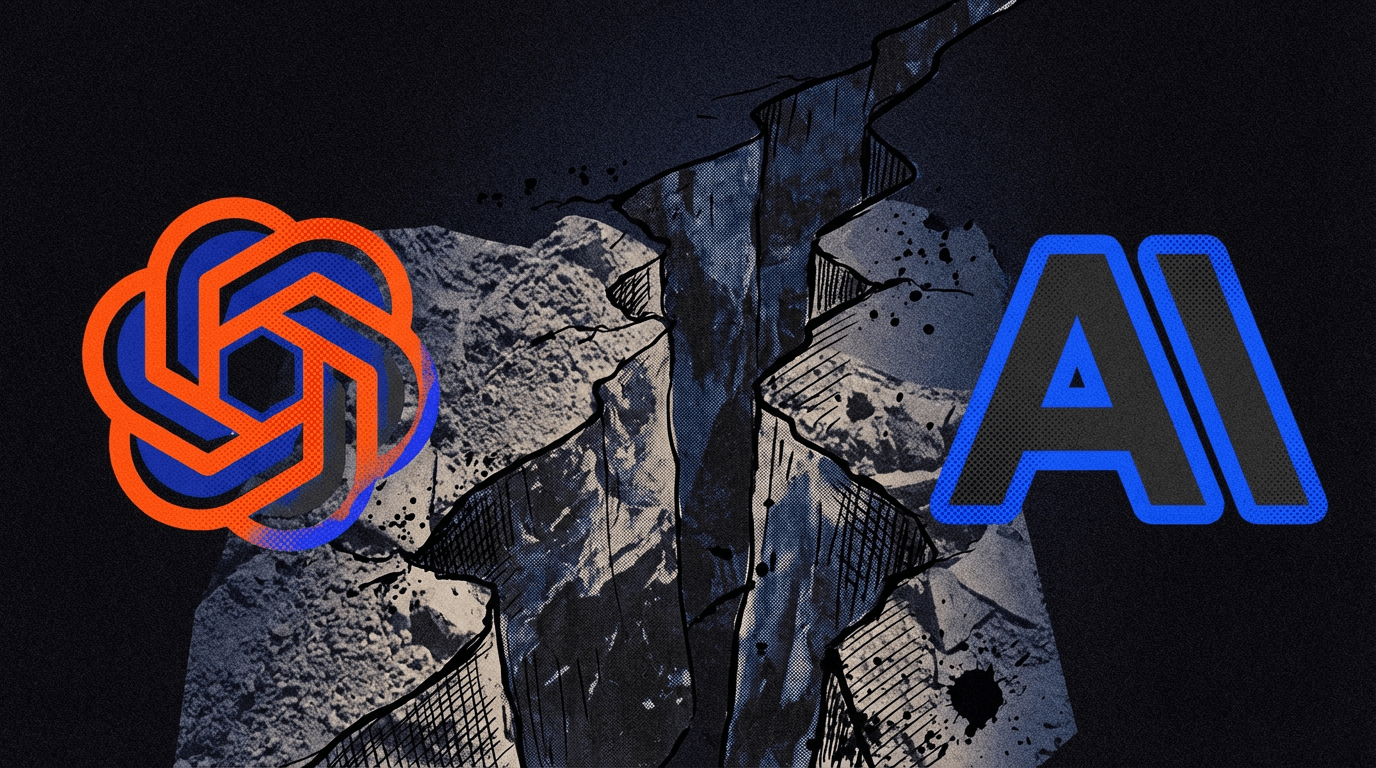
Price war between OpenAI and Anthropic: Tokens could become cheaper
Quick Answer
OpenAI is considering reducing token prices to attract customers from Anthropic, potentially intensifying the ongoing price war in the AI market.
Quick Take
This move aims to enhance competitiveness and could lead to lower costs for users relying on these AI models.
Key Points
- OpenAI may cut token prices to compete with Anthropic.
- The price war could lead to cheaper tokens for consumers.
- This strategy aims to increase OpenAI's customer base.
- Anthropic's pricing strategies are influencing market dynamics.
- Lower costs could enhance accessibility to AI technologies.
📖 Reader Mode
~1 min read

Jun 11, 2026
OpenAI is weighing token price cuts to win customers from Anthropic. The company expects Anthropic to make similar moves, according to the Wall Street Journal. At a recent event, CEO Sam Altman said costs have become "a huge issue" for businesses.
Anthropic's coding tool Claude Code recently went viral among developers, and the startup passed OpenAI in valuation for the first time. As AI agents get used more broadly in tools like these, usage costs have climbed, costs that were long covered by flat-rate subscriptions. Most providers have since shifted their enterprise pricing to usage-based billing. In practice, that means the same AI workload that used to cost $200 a month can quickly balloon to several thousand or even tens of thousands of dollars. In this emerging token economy, some enterprise customers are already pulling back on AI spending.
A price war could deepen the already billions-deep losses at both companies. OpenAI confidentially filed IPO paperwork this week but likely won't go public until 2027. Anthropic has also filed its paperwork and plans to list later this year.
— Originally published at the-decoder.com
Want this in your inbox every morning?
Daily brief at your local 8am — bilingual EN/中文, free.
More from The Decoder
See more →
An AI model programmed nonstop for 19 days on a single MirrorCode task that cost $2,600 to run
Epoch AI's MirrorCode benchmark reveals Claude Opus 4.7 as the leader with a 56% solve rate, reconstructing a 16,000-line toolkit in 14 hours. Despite this, all models tested struggle with the most complex tasks, highlighting limitations in current AI capabilities. The single task consumed $2,600 over 19 days, raising questions about cost-effectiveness in AI development.

