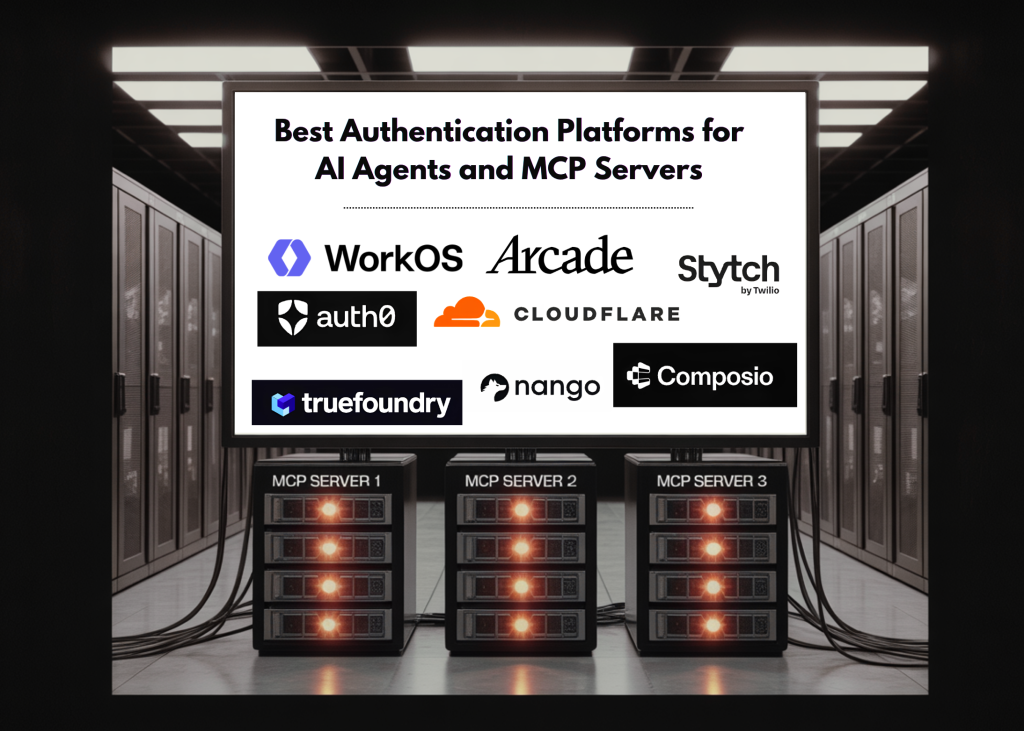
Best Authentication Platforms for AI Agents and MCP Servers in 2026
Quick Answer
As MCP reaches 97 million monthly SDK downloads, authentication platforms like WorkOS, Stytch, and Auth0 by Okta are critical for AI agents in production.
Quick Take
This guide evaluates eight leading platforms based on compliance, identity depth, integration breadth, and deployment suitability for 2026.
Key Points
- 's SDK downloads exceed 97 million monthly, highlighting the need for robust authentication.
- Top platforms include WorkOS, Stytch, and Auth0 by Okta, each with unique strengths.
- Evaluation criteria focus on compliance, identity depth, and integration capabilities.
- Real-world fit is crucial for successful deployment of AI agents in 2026.
- The guide serves as a resource for teams making critical infrastructure decisions.
Article Excerpt
From source RSS / original summaryAs crosses 97 million monthly SDK downloads and AI agents move into production workflows, authentication has become the most critical infrastructure decision teams face. This guide ranks the eight leading platforms — WorkOS, Stytch, Auth0 by Okta, Composio, Nango, Arcade, TrueFoundry, and Cloudflare — on spec compliance, enterprise identity depth, integration breadth, and real-world fit for 2026 deployments.
The post Best Authentication Platforms for AI Agents and MCP Servers in 2026 appeared first on MarkTechPost.
Want this in your inbox every morning?
Daily brief at your local 8am — bilingual EN/中文, free.
More from MarkTechPost
See more →Meet Flash-KMeans: An IO-Aware, Exact K-Means That Runs Over 200× Faster Than FAISS on GPUs
Flash-KMeans is an open-source, IO-aware k-means implementation that operates over 200× faster than FAISS on NVIDIA H200 GPUs. It achieves 17.9× end-to-end and 33× speedup over cuML by optimizing distance calculations and updating mechanisms without approximating results. This advancement significantly enhances performance for data scientists and machine learning practitioners.