
The Download: the first brain implant power user and South Korea’s AI obsession
Quick Answer
Casey Harrell, diagnosed with ALS, is the first 'power user' of a brain implant that enables him to communicate through a set of implanted electrodes.
Quick Take
This breakthrough technology highlights the potential of brain-computer interfaces in enhancing the quality of life for individuals with severe disabilities.
Key Points
- Harrell's brain implant allows him to communicate effectively despite ALS.
- The technology involves a set of electrodes embedded in the brain.
- Brain-computer interfaces are advancing rapidly, offering new hope for disabled individuals.
- This case represents a significant milestone in neurotechnology.
- South Korea is increasingly focused on AI advancements and their societal impacts.
📖 Reader Mode
~4 min readThis is today's edition of The Download, our weekday newsletter that provides a daily dose of what's going on in the world of technology.
This man with ALS is the first “power user” of a brain implant that lets him speak
Casey Harrell has had a set of electrodes embedded in his brain for almost three years. Harrell, who has ALS and is paralyzed, first used his brain-computer interface (BCI) to “speak” in 2023. Since then, he’s clocked thousands of hours of use.
Harrell can now use the device largely independently. His team has added new features to it, and he also uses it to surf the web and perform his job. “Living with a disease like ALS, you are supposed to have diminished dreams. I do not,” Harrell told MIT Technology Review.
The team behind the device call Harrell “the first power user of a speech BCI.” They now plan to add further enhancements to the device.
Dive into the groundbreaking impact of Casey Harrell’s BCI.
—Jessica Hamzelou
Why do South Koreans love AI so much?
While a public backlash against AI brews across the US, South Koreans are optimistic. Only 16% say they are more concerned than excited about AI—the lowest of the 25 countries surveyed by the Pew Research Center—while 50% of Americans were more worried than excited.
South Koreans share a deep conviction that embracing technology is integral to modernizing the country and cementing its place in the global order. Their fascination with AI is just the latest incarnation of that ethos—and it’s making them anxious to stay ahead.
Read the full story on South Korea’s AI fervour.
—Michelle Kim
This story is from The Algorithm, our weekly newsletter giving you the inside track on all things AI. Sign up to receive it in your inbox every Monday.
The must-reads
I’ve combed the internet to find you today’s most fun/important/scary/fascinating stories about technology.
1 The US says it restricted Anthropic AI over foreign intelligence risks
Commerce chief Lutnick said he acted over national security fears. (Reuters $)
+ Following the ban, Anthropic disabled access to its new models. (BBC)
+ Both sides are increasingly desperate for a resolution. (WSJ $)
2 DeepSeek just became China's most valuable startup
It raised $7 billion, the largest-ever first-round funding for an AI startup. (The Information $)
+ The deal values DeepSeek at over $50 billion. (WSJ $)
+ Its unusual structure preserves founder control. (Reuters $)
+ DeepSeek’s new flagship model has caused a stir. (MIT Technology Review)
3 Alibaba has unveiled AI models for robots amid a shift from chatbots
It’s joined a global race to move AI into the physical world. (SCMP)
+ AI is learning to understand its surroundings. (MIT Technology Review)
4 Fox is buying streaming giant Roku for $22 billion
The deal creates the third-largest player in US TV by viewing share. (BBC)
+ Fox is making a big bet on free streaming. (Washington Post $)
5 EA has launched a new way to advertise “directly into gameplay”
EA Advertising allows brands to become part of the game itself. (CNBC)
+ Xbox’s new chief strategy officer is also eyeing in-game ads. (PC Gamer)
+ GenAI could reinvent what it means to play. (MIT Technology Review)
6 It’s trivially easy to use Reddit to manipulate AI search
A tiny snippet of text can trick ChatGPT and Google’s AI search. (404 Media)
+ AI search is being manipulated to generate dangerous biases. (BBC)
7 Sperm have been made magnetic to allow IVF inside the body
The technique enables remote guidance towards an egg. (New Scientist $)
+ Automation and AI are transforming IVF. (MIT Technology Review)
8 The world’s leading deepfake expert no longer trusts his own eyes
He’s struggling to prove what’s real before the internet decides. (NYT $)
9 Meta’s CTO admits its AI reorganisation was “atrocious”
He's promised staff better communication—and snacks. (Wired $)
10 Silicon Valley billionaires are pretending to kill each other for fun
In a new game show from Peter Thiel’s Founders Fund. (WSJ $)
Quote of the day
“There was a speeding ticket, and they gave Fable the death penalty.”
—Alex Stamos, the former chief security officer of Facebook, tells the Washington Post that banning foreign access to Anthropic’s leading model is a disproportionate punishment.
One More Thing
VICTOR KERLOW
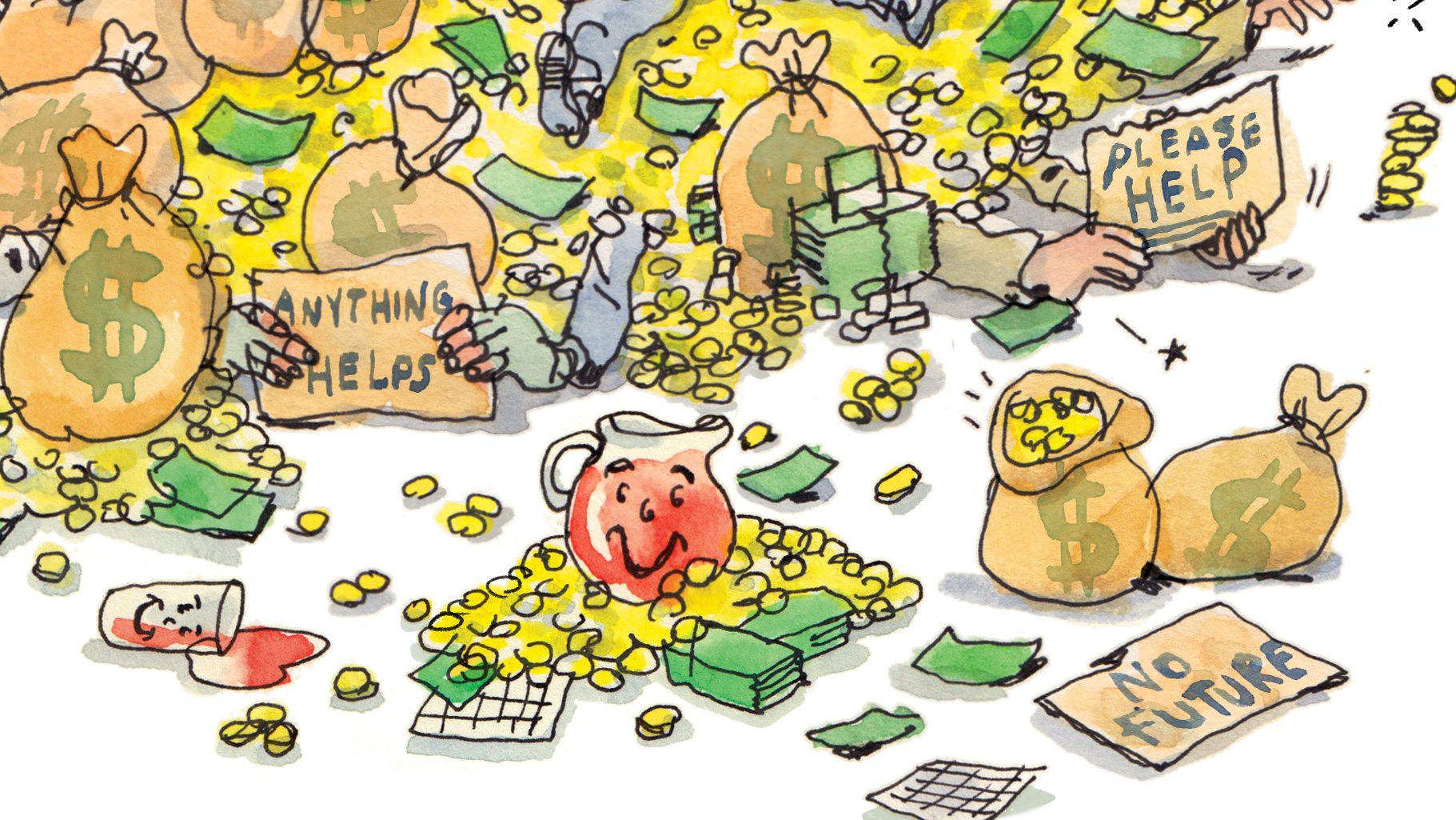
Inside effective altruism, where the far future counts a lot more than the present
Since its birth in the late 2000s, effective altruism has aimed to answer a deceptively simple question: “How can those with means have the greatest impact?”
— Originally published at technologyreview.com
Want this in your inbox every morning?
Daily brief at your local 8am — bilingual EN/中文, free.
More from MIT Technology Review
See more →
The Download: OpenAI unveils GPT-Red and heat pumps rise in the US
OpenAI's new GPT-Red automates red-teaming safety evaluations for software, enhancing security against human attackers. Meanwhile, heat pump sales in the US have doubled over 15 years, outperforming natural gas furnaces by 32% in early 2026, despite the expiration of a key tax credit.

