Why teens deserve access to safe AI
Quick Answer
Teens, who are increasingly using AI like ChatGPT for learning, need safe access paired with age-appropriate protections.
Quick Take
OpenAI emphasizes the importance of tailored safeguards while enhancing educational tools like Study Mode to foster critical thinking and deeper understanding.
Key Points
- 90% of teens use ChatGPT for learning and productivity weekly.
- Study Mode encourages critical thinking with structured guidance.
- Built-in safeguards reduce exposure to inappropriate content for under-18 users.
- Parental controls allow families to manage teen usage effectively.
- 18 million users engage with interactive learning experiences weekly.
📖 Reader Mode
~5 min readTeens are the first generation growing up with AI, and this technology will heavily shape their future. Today, nearly 9 in 10 teens on ChatGPT use it for learning, information, skill-building, or productivity in a single week. This is why we believe it’s critical for teens to have access to AI. Keeping teens from using it until adulthood would be like asking a previous generation to avoid the internet or search engines until they turned 18, leaving them less prepared to use one of the defining technologies of their time. But access must be paired with protections designed specifically for teens.
During a recent OpenAI Academy(opens in a new window) Oriana McKenzie shared how ChatGPT helped her become No.1 in her high school class by studying smarter and managing her workload—giving her the time needed for the sports and school programs she loves. Her story illustrates what’s possible when teens have access to AI that helps them learn and create.
To maximize those gains, teens need stronger protections designed for their stage of life, including automated guardrails that let them explore, learn, and build with confidence, while providing safeguards tailored to their age. As AI becomes more capable, our responsibility is to combine broad access with age-appropriate protections that allow teens to benefit from this technology as it evolves.
Over the past year, that has meant strengthening default protections for teens, rolling out age prediction, expanding Parental Controls, creating additional family resources(opens in a new window) to help parents support healthy, responsible use, and introducing learning features to help support deeper understanding rather than just providing answers.
- We put teen safety first even when it may conflict with other goals.
- We encourage real-world support in times of need.
- We treat teens as teens.
- We are transparent by setting clear expectations.
Building for learning, not just answers
Learning is one of the clearest ways teens benefit from AI, so we’re building tools that encourage active engagement, critical thinking, and deeper understanding. Study Mode(opens in a new window) was designed in collaboration with teachers, learning scientists, and pedagogy experts to help students work through problems step by step using guiding questions, structured explanations, and opportunities for reflection without simply providing the answer. Early evaluation of tools like Study Mode has shown promising gains in student performance, helping inform our broader research into how AI can support learning outcomes.
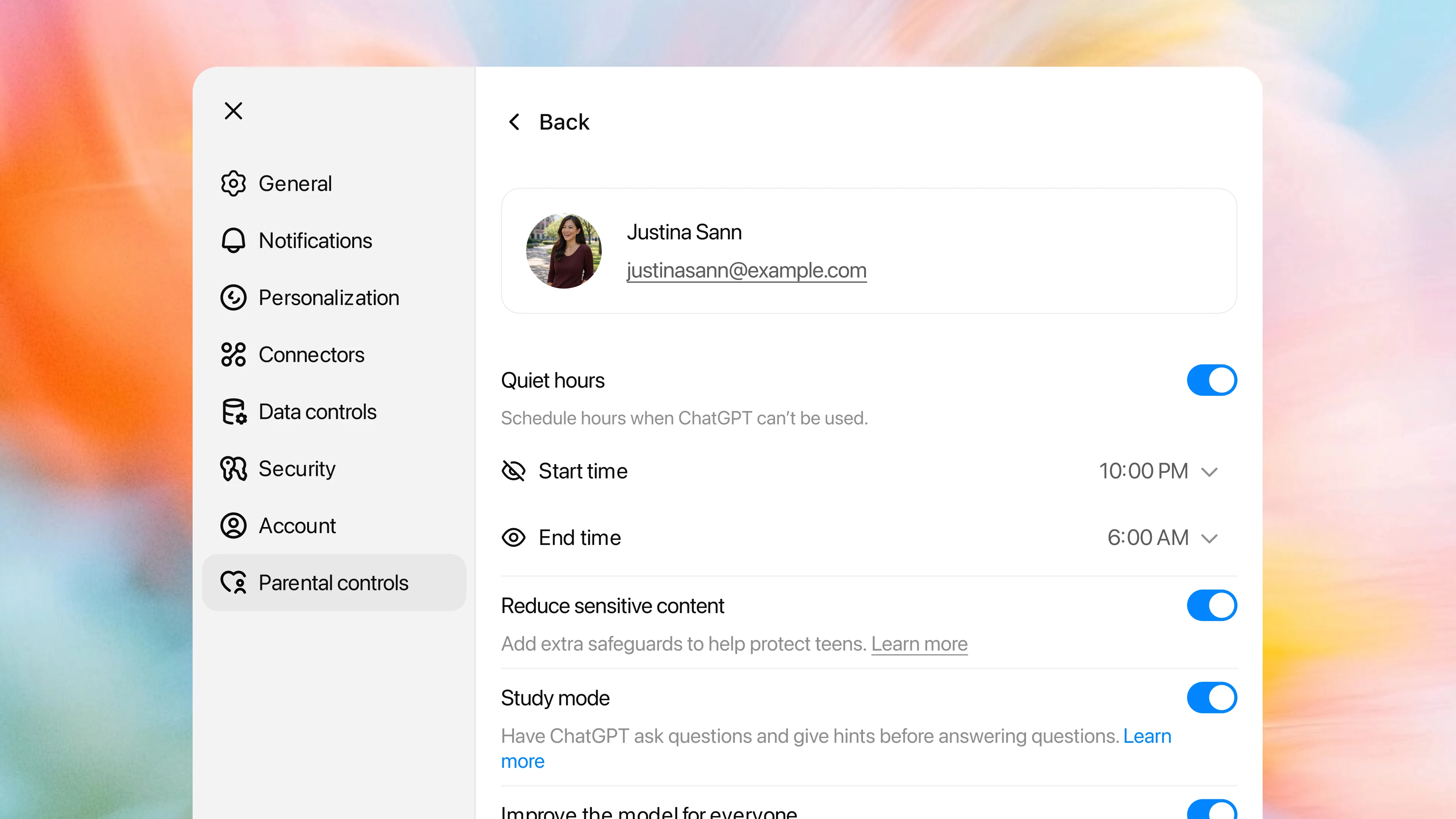
While teens can turn this mode on themselves, now parents with linked teen accounts can turn on Study Mode directly from Parental Controls. When enabled, it is on by default whenever a teen starts a new chat, giving families another way to guide how ChatGPT is used for schoolwork and study.
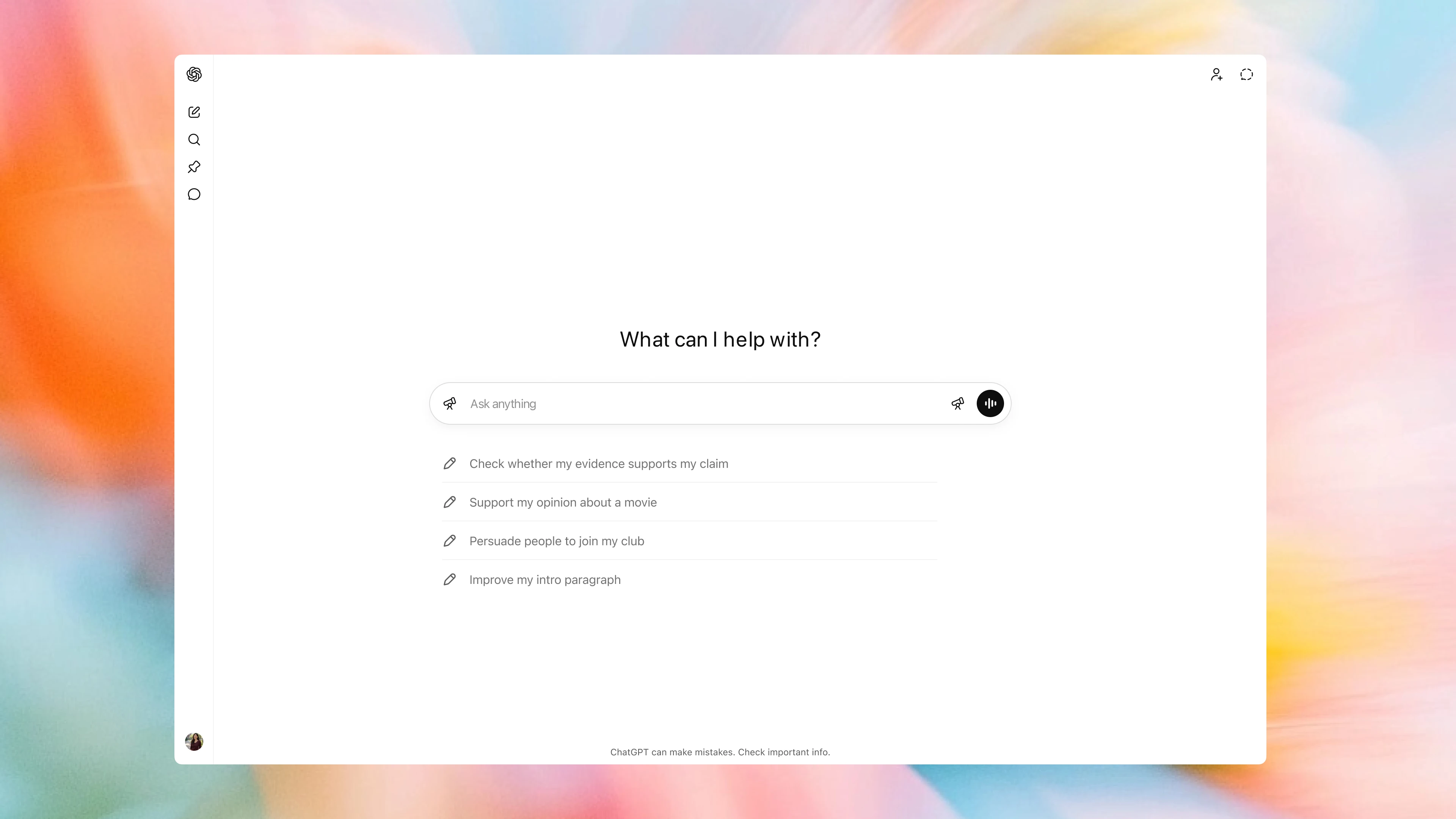
We also recently introduced education-focused starter prompts for teens so it is easier to begin with tasks like breaking down a topic into simple steps, turning notes into a study guide, creating flashcards or practice questions, and checking evidence and clarity.
We’re continuing to expand interactive learning experiences as well. Research has consistently shown that people learn more effectively when they can actively engage with concepts rather than passively consume information. Since launching earlier this year, 18 million weekly users now engage with interactive math and science experiences in ChatGPT, and we’ve expanded those experiences to more than 250 new topics, from integrals and mitosis to moon phases, photosynthesis and more. We also introduced a pronunciation experience that uses audio to help people learn how to pronounce words in more than 61 languages.
Protecting teens with built-in safeguards
If our system estimates someone using ChatGPT is under 18, we automatically provide a more age-appropriate experience(opens in a new window). Teens can still use ChatGPT to learn, create, and explore, but with additional protections designed to reduce exposure to content that may not be appropriate for them. That includes stronger safeguards around graphic violence, self-harm, risky viral challenges, unhealthy body-image content, and dangerous, romantic, or sexual roleplay. The North Star is to help ensure ChatGPT remains a tool for learning and creativity and not a substitute for real-world relationships.
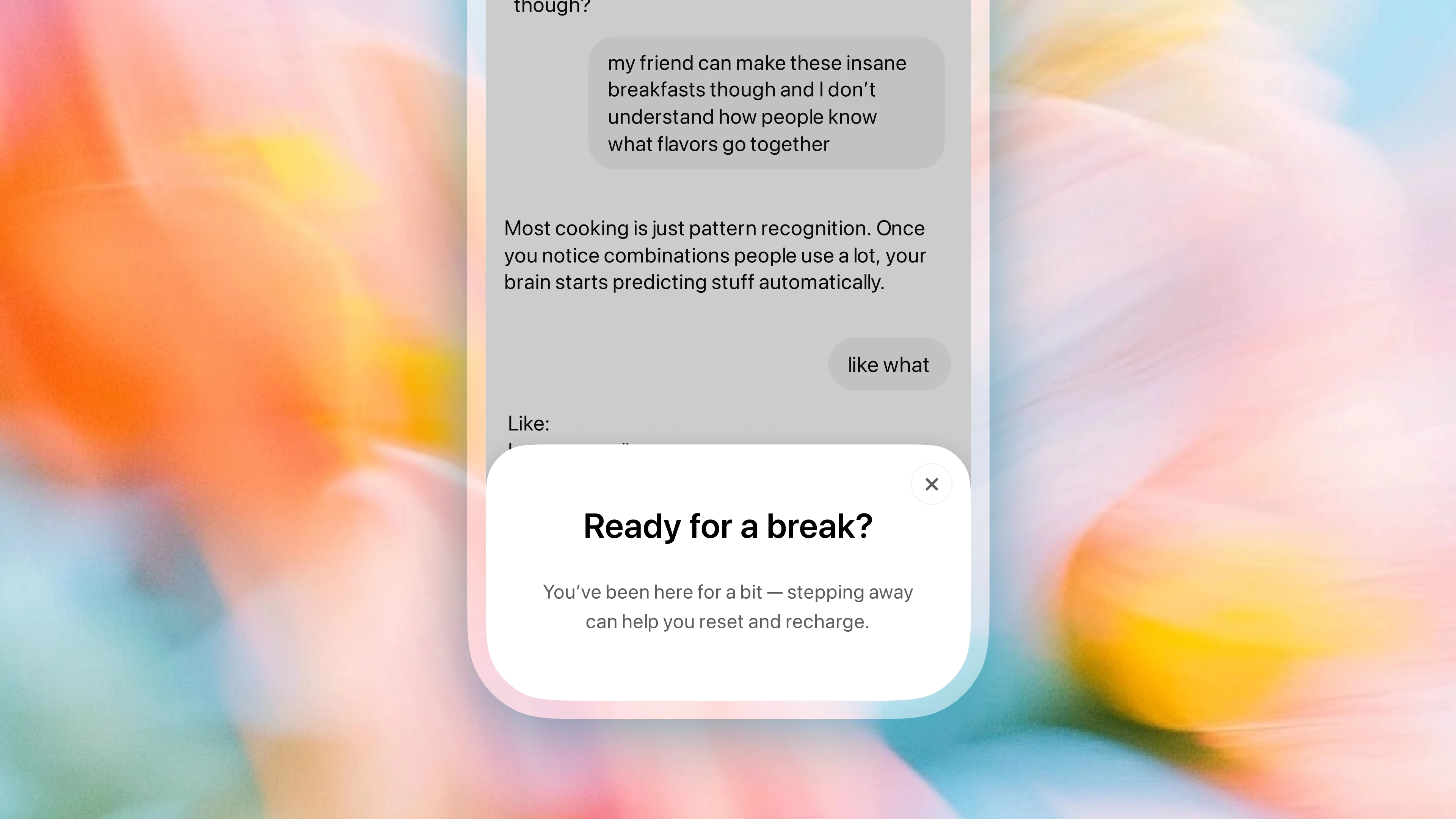
We’re also designing ChatGPT to encourage healthy habits. Teens who spend extended time in ChatGPT will now receive more frequent break reminders that encourage them to pause and step away. These reminders are intended to help young people build balanced technology habits while still giving them the freedom to use AI for learning, creativity, and problem-solving.
We believe the best safety tools can help families navigate teens’ online experiences together. We built parental controls and notifications that allow them to set quiet hours, turn off voice mode, manage access to image generation, and receive notifications in certain high-risk situations, such as indications of potential self-harm.
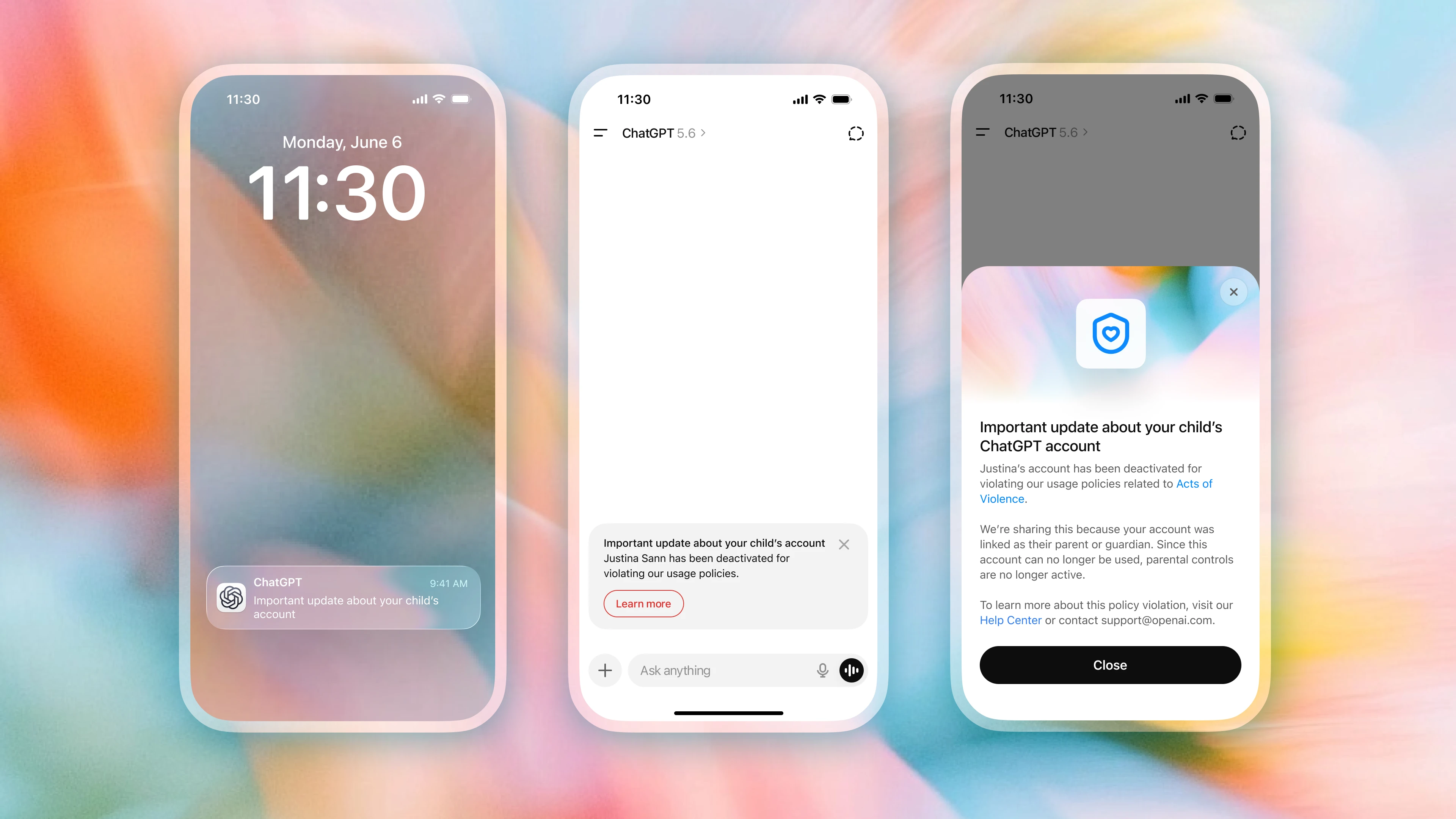
We’re expanding those notifications to include cases where a linked teen account has been deactivated for violating our usage policies on violent threats or acts of violence online. This approach helps parents know when something serious has happened while respecting teens’ privacy and encouraging conversations and support offline.
As we developed these features we consulted with several experts, including Moonshot(opens in a new window), a leader in preventing online violence, to help ensure these interventions are thoughtful, effective, and focused on helping families respond in times of need.
Working with outside experts, organizations, developers and regulators
Keeping young people safe online isn’t something any one company can solve alone. We work closely with teens, parents, educators, child safety experts, mental health professionals, researchers, governments, and civil society organizations. These partnerships help us better understand the needs of young people, identify emerging risks, evaluate the effectiveness of our safeguards, and ensure our policies are informed by independent expertise.
This year, we also joined the Family Online Safety Institute(opens in a new window) (FOSI), a long-standing advocate for safe online experiences for families and young people. We will work together to ensure young people can benefit from AI, with empowered parents and responsible industry practice at the center. We hope this partnership will help advance shared understanding of what works, strengthen age-appropriate protections and parental tools, and support industry-wide efforts that enable young people to benefit from AI safely and responsibly.
Looking ahead
Protecting young people online requires continuous progress. In the coming months, we’ll continue strengthening age-appropriate protections, giving parents more tools and control, improving safeguards against serious harms, advancing research on healthy AI use, and building more experiences that help teens learn actively and use AI with confidence.
We know there is more to do, and we’re committed to continuing our work in collaboration with teens, parents, educators, experts, and communities worldwide to bring safe broad access to teens.
— Originally published at openai.com
Want this in your inbox every morning?
Daily brief at your local 8am — bilingual EN/中文, free.
More from OpenAI Blog
See more →Scientific computing in the age of agentic AI
AI agents are transforming scientific computing by streamlining software development, enabling researchers to focus on discovery. Projects using Codex and Claude Code report accelerated development and improved maintenance, though challenges in validating AI outputs remain. Long-term stewardship of research software is crucial to ensure reliability and reproducibility.