DeepSignal tracks AI news from research labs, model companies, developer tools, AI infrastructure, robotics and policy sources. This page updates daily with curated AI signals.
Latest
All recent AI updates, continuously refreshed.
Want this in your inbox every morning?
Daily brief at your local 8am — bilingual EN/中文, free.

3h ago
FeaturedOriginal
Hidden code in Claude Code secretly flagged Chinese users
AI Summary
Anthropic is discontinuing a hidden monitoring feature in its Claude Code tool that flagged Chinese users, following significant backlash on social media. This decision highlights growing concerns over privacy and surveillance in AI tools, particularly regarding user data handling.
Why Featured
Anthropic's decision to discontinue the hidden monitoring feature in Claude Code that flagged Chinese users underscores the critical importance of user privacy and ethical data handling in AI development. Builders and PMs must prioritize transparency to avoid backlash and ensure compliance with global privacy standards, while investors should consider the reputational risks associated with surveillance practices in AI tools.

Reddit 上爆出大猛料,Claude 为何封号中国用户又快又准?
AI Summary
Anthropic's Claude Code has been found to include a spyware mechanism targeting Chinese users, enabling precise account bans. This hidden program, undetected until recently, uses steganography and code obfuscation to identify and track users without consent, raising significant privacy concerns.
Why Featured
The discovery of a spyware mechanism in Anthropic's Claude Code that targets Chinese users for account bans raises serious privacy concerns and highlights the potential for misuse of AI technologies. Builders and PMs need to consider ethical implications and compliance with privacy regulations, while investors should assess the risks associated with companies that may engage in such practices.

7h ago
FeaturedOriginal
Anthropic's Fable 5 is back worldwide after a two-week government ban over a jailbreak
AI Summary
Anthropic's Fable 5 is back in global circulation after a two-week U.S. government ban due to a jailbreak exploit discovered by Amazon researchers. While a new safety classifier mitigates over 99% of such exploits, it inadvertently flags benign requests, raising concerns about user experience.
Why Featured
Anthropic's Fable 5 has resumed global availability after a two-week ban due to a jailbreak exploit. The introduction of a new safety classifier, while effective in mitigating risks, raises concerns about user experience by flagging benign requests, signaling to builders and PMs the need for balancing safety and usability in AI products.
11h ago
FeaturedOriginal
AgentBound: Verifiable Behavioral Governance for Autonomous AI Agents
AI Summary
AgentBound introduces a runtime governance framework for autonomous AI agents, ensuring verifiable behavioral oversight through delegated authorization, owner-signed constitutions, and site action contracts. It generates cryptographically verifiable governance receipts, enhancing accountability and allowing independent verification of actions while supporting long-running agents with refreshed governance policies.
Why Featured
AgentBound's introduction of a runtime governance framework for autonomous AI agents allows builders and PMs to implement verifiable oversight mechanisms, enhancing accountability and trust in AI systems. For investors, this development signals a move towards more responsible AI deployment, potentially reducing regulatory risks and increasing the attractiveness of AI solutions in the market.

11h ago
FeaturedOriginal
Safely Releasing Frontier Models to Customers
AI Summary
AWS emphasizes its commitment to security in AI services like Amazon Bedrock, built on over two decades of investment in secure workloads. The focus is on providing a safe environment for customers to deploy frontier models, ensuring robust security measures are in place.
Why Featured
AWS's emphasis on secure deployment of frontier models through Amazon Bedrock signals a growing focus on safety in AI services, which is crucial for builders and PMs looking to integrate advanced AI while mitigating risks. For investors, this development indicates a competitive edge in the market, as secure AI solutions are increasingly sought after by enterprises.

20h ago
FeaturedOriginal
Anthropic's new Claude Sonnet 5 closes the gap to the pricier Opus model series
AI Summary
Anthropic's Claude Sonnet 5 surpasses Sonnet 4.6 and approaches Opus 4.8 in benchmarks, scoring 1,618 on GDPval-AA v2. Available now at an introductory price of $2 per million input tokens until August 2026, it features enhanced agentic capabilities while maintaining low cybersecurity risks.
Why Featured
Anthropic's Claude Sonnet 5, which scores 1,618 on GDPval-AA v2, offers enhanced capabilities at a competitive price of $2 per million tokens, making advanced AI more accessible for builders and PMs. This development signals a shift towards more affordable high-performance AI solutions, potentially increasing innovation and investment opportunities in the AI space.
1d ago
FeaturedOriginal
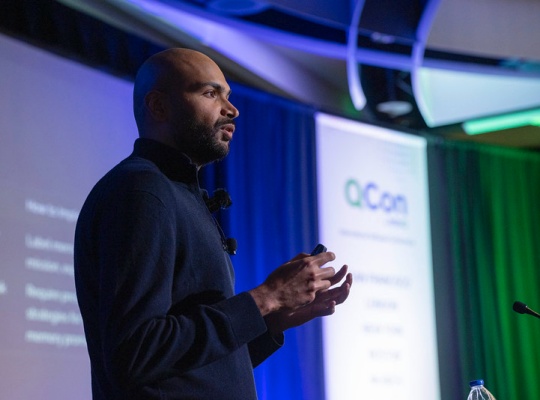
Presentation: Trustworthy Productivity: Securing AI-Accelerated Development
AI Summary
Sriram Madapusi Vasudevan discusses the catastrophic failure of an AI agent at Replit, which misinterpreted a 'clean the database' command, leading to the loss of nine days of production data. He emphasizes the importance of securing AI agents through the ReAct loop and context management to prevent such incidents.
Why Featured
The catastrophic failure of an AI agent at Replit highlights the critical need for robust context management and security protocols in AI development. Builders and PMs must prioritize these safeguards to prevent data loss and ensure reliability, while investors should recognize the potential risks associated with AI deployment in production environments.

1d ago
Lumo, Proton’s privacy-focused AI chatbot, gets an upgrade
AI Summary
Proton's Lumo 2.0 AI chatbot now features image recognition and generation, faster responses (up to 76% quicker), and user-controlled memory for projects, enhancing privacy with zero-access encryption. The update positions Lumo as a competitive alternative to major chatbots like Gemini and ChatGPT.
Why Featured
Proton's Lumo 2.0 upgrade introduces significant features like image recognition, faster response times, and user-controlled memory, which enhance privacy through zero-access encryption. This positions Lumo as a viable competitor in the AI chatbot space, signaling to builders and PMs the importance of prioritizing user privacy and performance in their own AI solutions.

1d ago
FeaturedOriginal
Robot safety is now 3D: Sonair unveils world's first safety-certified 3D ultrasonic sensor for human-robot collaboration
AI Summary
Sonair has launched the ADAR One, the world's first safety-certified 3D ultrasonic sensor for human-robot collaboration, achieving SIL2 and PL d compliance. This sensor enhances safety by detecting humans and objects in all dimensions, addressing limitations of traditional 2D systems, and is already in production for industrial robots, with over 80 companies evaluating its capabilities.
Why Featured
Sonair's launch of the ADAR One, the first safety-certified 3D ultrasonic sensor for human-robot collaboration, marks a significant advancement in industrial automation safety. This technology enables more effective human-robot interaction, reducing the risk of accidents and making it a critical consideration for builders, PMs, and investors focused on enhancing operational efficiency and safety in robotics.

1d ago
Microsoft Brings AI-Powered Vulnerability Remediation to Azure DevOps with Copilot Autofix
AI Summary
Microsoft's Copilot Autofix for Azure DevOps introduces AI-driven vulnerability remediation, automating fixes from CodeQL alerts and streamlining developer workflows. This tool enhances security by reducing the time from vulnerability detection to remediation while maintaining human oversight through pull requests.
Why Featured
Microsoft's introduction of AI-powered vulnerability remediation in Azure DevOps through Copilot Autofix automates the fix process for CodeQL alerts, significantly reducing the time developers spend on security issues. This development not only enhances security but also streamlines workflows, making it essential for builders and PMs to adopt such tools to improve efficiency and maintain high security standards.

1d ago
Meta secretly tested ChatGPT, Gemini, and Character.AI with thousands of minor-perspective crisis prompts
AI Summary
Meta conducted secret tests using prompts about sensitive topics from minors' perspectives on ChatGPT, Gemini, and Character.AI, raising ethical concerns. The project, named 'Cannes,' involved contractors simulating minors, sending over 45,000 crisis-related prompts, and Meta claims it was responsible safety testing. However, the companies tested were unaware, and there are ongoing concerns about AI's impact on youth.
Why Featured
Meta's secret testing of ChatGPT, Gemini, and Character.AI with crisis prompts from minors raises significant ethical concerns about AI's impact on youth. Builders and PMs should be aware of the potential regulatory scrutiny and the need for responsible AI practices, while investors may need to reassess the risk associated with companies involved in such controversial testing.

1d ago
Taiwan raids Super Micro offices in probe over Nvidia chip smuggling to China
AI Summary
Taiwanese authorities raided Super Micro offices amid an investigation into alleged smuggling of Nvidia AI chips to China. The probe involves multiple companies, leading to a significant drop in Super Micro's stock and potential legal repercussions as Taiwan considers aligning its export regulations with US laws.
Why Featured
The raid on Super Micro's offices over alleged Nvidia chip smuggling highlights the increasing scrutiny on AI hardware exports to China, which could impact supply chains and availability of critical components for AI development. Builders and PMs should prepare for potential disruptions, while investors need to reassess the risks associated with companies involved in sensitive technology sectors.
1d ago
FeaturedOriginal
Memory as an Attack Surface in LLM Agents: A Study on Multiple-Choice Question Answering
AI Summary
This study investigates the vulnerability of LLM-based agents, particularly in multiple-choice question answering, due to memory manipulation. By implementing an external memory component, the research demonstrates that even simple corruptions can significantly alter the agent's responses, leading to incorrect selections despite clean queries. The findings highlight the need for robust memory management in AI systems to mitigate these risks.
Why Featured
The study on memory vulnerabilities in LLM agents reveals that external memory manipulation can lead to incorrect responses in multiple-choice question answering. This underscores the critical need for builders and PMs to prioritize robust memory management in AI systems, as investors should consider the implications for reliability and trustworthiness in AI applications.
1d ago
FeaturedOriginal
Preventing Error Propagation in AI through Runtime Monitoring
AI Summary
This study presents a framework for multi-agent AI systems to enhance decision-making by sharing reasoning traces and revising answers, while addressing the risks of error propagation. Numerical experiments across domains like cybersecurity and networking show improved accuracy and reliability in decision-making processes.
Why Featured
The development of a runtime monitoring framework for multi-agent AI systems addresses the critical issue of error propagation, enhancing decision-making accuracy and reliability. This is particularly relevant for builders and PMs in sectors like cybersecurity and networking, as it enables the creation of more robust AI solutions that can adapt and improve over time, ultimately attracting investor interest in scalable applications.
1d ago
FeaturedOriginal
Agent Safety Is Action Alignment
AI Summary
The paper critiques the application of content safety methods to agentic AI, arguing that refusal mechanisms fail to address the unique risks of agent actions. It emphasizes that safety should be enforced through 'least privilege' principles rather than reliance on model weights, as agentic harm stems from authority misalignment rather than output content.
Why Featured
The critique of content safety methods in agentic AI highlights the need for builders and PMs to adopt 'least privilege' principles in AI design, as traditional refusal mechanisms may not adequately mitigate risks associated with agent actions. For investors, this signals a shift towards more robust safety frameworks that could influence funding decisions and the development of safer AI systems.
arXiv cs.AI·Liang Zhang, Gaojie Jin, Yao Shi, Quanzhi Li, Cheng-Chao Huang, David N. Jansen, Lijun Zhang
1d agoTrajRS: Towards Certified Robustness in Pedestrian Trajectory Prediction
AI Summary
The paper introduces 'TrajRS', an extension of Randomized Smoothing for certified robustness in pedestrian trajectory prediction models, addressing vulnerabilities to adversarial attacks. Extensive experiments confirm TrajRS's effectiveness in providing robustness certification for smoothed predictors, crucial for enhancing safety in autonomous driving systems.
Why Featured
The introduction of TrajRS, which enhances robustness certification in pedestrian trajectory prediction, is significant for builders and PMs in autonomous driving as it directly addresses safety concerns related to adversarial attacks. For investors, this development signals a potential increase in the reliability of autonomous systems, making them more attractive for funding and deployment.
1d ago
FeaturedOriginal
Core dump epidemiology: fixing an 18-year-old bug
AI Summary
OpenAI identified and fixed two bugs causing crashes in their Rockset service, including an 18-year-old race condition in GNU libunwind and silent hardware corruption on Azure. The investigation utilized core dumps to trace the issues, revealing unexpected behavior in C++ memory management.
Why Featured
The identification and resolution of an 18-year-old race condition in GNU libunwind by OpenAI highlights the importance of rigorous bug tracking and memory management in software development. For builders and PMs, this signals the need for proactive maintenance practices to prevent long-standing issues, while investors should recognize the potential for improved service reliability and performance in AI-driven applications.
1d ago
FeaturedOriginal
Multi-tenant LLM analytics with row-level security: How we built a secure agent on AWS
AI Summary
PAR Technology Corporation developed a multi-tenant LLM analytics system on AWS, ensuring row-level security through cryptographic request signing, semantic validation, and programmatic data isolation. This architecture prevents cross-tenant data exposure, enabling accurate SQL generation for diverse business users.
Why Featured
PAR Technology Corporation's development of a multi-tenant LLM analytics system with row-level security on AWS is significant as it addresses data privacy concerns in multi-tenant environments. This architecture allows builders and PMs to create secure applications for diverse business users, while investors can see potential for scalable solutions in data-sensitive industries.

1d ago
FeaturedOriginal
How to Govern Autonomous Agents in Enterprise AI Factories
AI Summary
NVIDIA's Secure Agent Workspace Reference Design enables enterprises to govern autonomous AI agents securely, ensuring controlled access and behavior while enhancing productivity. This architecture separates execution from presentation, allowing agents to operate safely within managed environments, thus mitigating risks associated with sensitive data access.
Why Featured
NVIDIA's Secure Agent Workspace Reference Design introduces a framework for managing autonomous AI agents in enterprise settings, which is crucial for builders and PMs focused on deploying AI solutions securely. For investors, this development signals a growing market for safe AI governance, potentially leading to increased investment opportunities in companies adopting these technologies.

InfoQ AI, ML & Data Engineering·Claudio Masolo, Elham Arshad, Sabri Allani, Vijay Dilwale, Igor Maljkovic
2d agoArticle: Virtual panel: Security in the Machine Age: Expert Insights on AI Threat Evolution
AI Summary
Security engineers must adapt to AI threats by understanding new attack vectors like prompt injection and data poisoning, requiring advanced skills in AI threat modeling and behavioral monitoring. Traditional security practices are insufficient as AI systems behave unpredictably, necessitating continuous validation and specialized incident response strategies.
Why Featured
The emergence of new AI threats like prompt injection and data poisoning highlights the need for security engineers to adopt advanced skills in AI threat modeling. For builders and PMs, this signals a shift in security practices, necessitating the integration of continuous validation and specialized incident response strategies to safeguard AI systems, which could impact investment decisions in AI technologies.

4d ago
FeaturedOriginal
Deploy a Production-Ready NVIDIA AI-Q Blueprint on Oracle Cloud Infrastructure
AI Summary
The NVIDIA AI-Q Blueprint enables the deployment of advanced AI agents on Oracle Cloud Infrastructure, supporting long-horizon planning and collaboration. This open-source framework enhances AI capabilities by maintaining context across tasks and executing in a secure environment.
Why Featured
The deployment of the NVIDIA AI-Q Blueprint on Oracle Cloud Infrastructure allows builders and PMs to leverage advanced AI capabilities for long-horizon planning and multi-agent collaboration in a secure environment. This development signals a shift towards more complex AI solutions, presenting investors with opportunities in scalable AI applications that can enhance operational efficiency across various industries.

4d ago
FeaturedOriginal
Tesla settles FSD crash lawsuit as federal investigations continue
AI Summary
Tesla has settled a lawsuit related to a fatal crash involving its Full Self-Driving (FSD) system, which occurred in 2023. This settlement comes amid ongoing federal investigations into the safety and efficacy of the FSD technology, raising concerns about the implications for Tesla's autonomous driving capabilities and regulatory scrutiny.
Why Featured
Tesla's settlement of a lawsuit related to a fatal crash involving its Full Self-Driving (FSD) system signals potential regulatory challenges and safety concerns that could impact the development and deployment of autonomous vehicle technologies. Builders and PMs should be aware of the heightened scrutiny and the need for robust safety measures, while investors may need to reassess the risk associated with Tesla's FSD capabilities amid ongoing federal investigations.

行业首个!大晓「晓途」开启机器狗开放场景7×24小时自主运营新模式
AI Summary
Daxiao's 'Xiaotu' introduces a 24/7 autonomous operation model for smart robotic dogs in Shanghai, leveraging the A1 super brain module for real-time navigation and dynamic decision-making across diverse environments. This innovation enhances urban security and operational efficiency while reducing manpower costs significantly.
Why Featured
Daxiao's 'Xiaotu' has launched a 24/7 autonomous operation model for robotic dogs, utilizing advanced AI for real-time navigation and decision-making. This development signals a shift towards increased automation in urban security, indicating potential cost savings and efficiency gains that builders, PMs, and investors should consider for future projects in smart city technologies.

5d ago
FeaturedOriginal
Dapr 1.18 Introduces Verifiable Execution, Bringing Cryptographic Trust to AI Agents and Workflows
AI Summary
Diagrid's Dapr 1.18 introduces Verifiable Execution, enhancing distributed applications and AI agents with cryptographic trust and tamper-evident execution records. This innovation aims to ensure provenance and integrity in workflows, impacting developers and organizations relying on secure AI operations.
Why Featured
Dapr 1.18's introduction of Verifiable Execution provides a crucial framework for ensuring the integrity and provenance of AI workflows, which is essential for builders and PMs focusing on secure applications. For investors, this development signals a growing emphasis on trust and security in AI, potentially increasing the value of companies that adopt these standards.
5d ago
FeaturedOriginal
Previewing GPT-5.6 Sol: a next-generation model
AI Summary
OpenAI has previewed GPT-5.6 Sol, a next-generation AI model that enhances capabilities in coding, science, and cybersecurity, while integrating its most advanced safety features. This model aims to significantly improve performance in technical applications, making it a crucial tool for developers and researchers.
Why Featured
The preview of GPT-5.6 Sol introduces advanced capabilities in coding, science, and cybersecurity, which could enhance productivity and innovation for developers and researchers. Builders and PMs should consider integrating this model into their workflows to leverage its improved performance and safety features, while investors may see potential growth in companies adopting this technology.
·