https://blogs.microsoft.com/ai/

Success in AI hinges on two key elements: Intelligence and Trust. This insight, reinforced by discussions with customers, highlights the importance of addressing concerns about AI's impact on business operations and decision-making.
The emphasis on Intelligence and Trust in AI development signals to builders and PMs that addressing customer concerns about AI's impact is crucial for adoption. For investors, this highlights the need to support companies that prioritize transparency and ethical AI practices, ensuring long-term viability and market competitiveness.
AI integration in enterprises is reshaping every function and role, but success hinges on the underlying systems supporting it. Organizations that adapt their operational frameworks will outperform traditional businesses, marking a significant shift in the competitive landscape.
The emphasis on operational frameworks as a critical factor for AI success highlights the need for builders and PMs to focus on integrating AI with existing systems. For investors, this signals a shift in competitive advantage towards companies that effectively adapt their infrastructure to leverage AI capabilities, suggesting a new evaluation criterion for investment opportunities.
Organizations are transitioning from AI pilots to enterprise-wide implementations, focusing on measurable outcomes and scalability. The key challenge now is not whether to invest in AI, but how to effectively scale its adoption and ensure consistent delivery across the business.
The shift from AI pilots to enterprise-wide implementations underscores the need for scalable solutions that deliver measurable outcomes. Builders and PMs must focus on developing robust frameworks for integration, while investors should prioritize companies demonstrating effective execution strategies to capitalize on this trend.
Frontier firms are evolving their operating models to integrate AI, with third-party plugins launching on May 12, 2026. This shift reflects a transformation in software development, moving through four distinct patterns of human-agent collaboration, significantly impacting engineering teams and productivity.
The launch of third-party plugins on May 12, 2026, signals a significant shift in software development towards enhanced human-agent collaboration. Builders and PMs need to adapt their strategies to leverage these integrations, while investors should consider the potential for increased productivity and innovation in frontier firms adopting these new operating models.
Microsoft emphasizes that as organizations evolve into Frontier Firms, they leverage AI to enhance productivity and foster business transformation. By integrating AI tools like Copilots into daily operations, companies can boost creativity, speed up innovation, and democratize intelligence, ultimately driving growth.
Microsoft's integration of AI tools like Copilots into daily operations signals a significant shift for organizations aiming to become Frontier Firms. This development highlights the necessity for builders and PMs to adopt AI-driven solutions to enhance productivity and innovation, while investors should recognize the potential for growth in companies leveraging these technologies.
Microsoft and OpenAI have amended their partnership agreement to enhance flexibility and predictability, allowing OpenAI to serve products across any cloud while maintaining Microsoft as its primary cloud partner. The agreement also establishes a non-exclusive licensing model for Microsoft until 2032, eliminating revenue share payments from Microsoft to OpenAI.
The amendment of the Microsoft-OpenAI partnership allows OpenAI to deploy its products across any cloud while keeping Microsoft as its primary partner, which signals increased competition in the cloud AI space. For builders and PMs, this means greater flexibility in choosing cloud infrastructure, and for investors, it indicates a shift towards more sustainable revenue models in AI partnerships.
Microsoft partners are crucial for accelerating AI adoption, enabling organizations to scale AI with security and governance. The Microsoft 365 E7 and Agent 365 suite, launching May 1, 2026, integrates tools for productivity, identity control, and AI governance, supporting over 90% of Fortune 500 companies using Microsoft 365 Copilot.
The launch of Microsoft 365 E7 and Agent 365 on May 1, 2026, signals a significant shift towards integrated AI governance and productivity tools for enterprises. Builders and PMs should prepare for increased demand for secure AI solutions, while investors may find opportunities in companies that enhance or complement these offerings.
The new book 'Open to Work' by Ryan Roslansky and Aneesh Raman offers practical strategies for navigating careers in the AI era, emphasizing the importance of adaptability and human uniqueness. It aims to empower individuals to engage with AI proactively and shape their career paths amid evolving job landscapes.
The release of 'Open to Work' provides builders, PMs, and investors with insights on how to adapt to the evolving job landscape shaped by AI. Understanding the importance of human uniqueness and adaptability can inform talent strategies and investment in workforce development, ensuring competitive advantage in an AI-driven economy.
Microsoft is restructuring its Copilot organization to unify consumer and commercial efforts under Jacob Andreou, enhancing AI capabilities and user experience. This initiative aims to streamline product integration and focus on superintelligence, with Mustafa Suleyman leading the model development efforts.
Microsoft's restructuring of its Copilot organization under Jacob Andreou signals a stronger focus on integrating AI across consumer and commercial products. For builders and PMs, this means potential new opportunities for collaboration and innovation in AI-driven applications, while investors should note the emphasis on superintelligence as a key growth area in Microsoft's strategy.

Kevin Scott, Microsoft's CTO, discusses the future of AI, emphasizing advancements in large language models like GPT-4. He highlights the importance of responsible AI development and the need for collaboration across industries to harness AI's potential while addressing ethical concerns.
Kevin Scott's insights on advancements in large language models like GPT-4 highlight the need for builders and PMs to integrate responsible AI practices into their products, ensuring ethical considerations are met. For investors, this signals a growing market for AI solutions that prioritize collaboration and ethical development, potentially leading to more sustainable and competitive investments.

Brands are leveraging Microsoft AI tools to enhance productivity and creativity, with applications ranging from content generation to data analysis. Companies report significant improvements in efficiency, allowing for more imaginative marketing strategies and streamlined operations. The integration of AI is reshaping how businesses approach content management and customer engagement.
The integration of Microsoft AI tools for content generation and data analysis signifies a shift in how brands enhance productivity and creativity. Builders and PMs should consider adopting these AI solutions to improve operational efficiency and innovate marketing strategies, while investors should note the potential for increased ROI as companies leverage AI for competitive advantage.

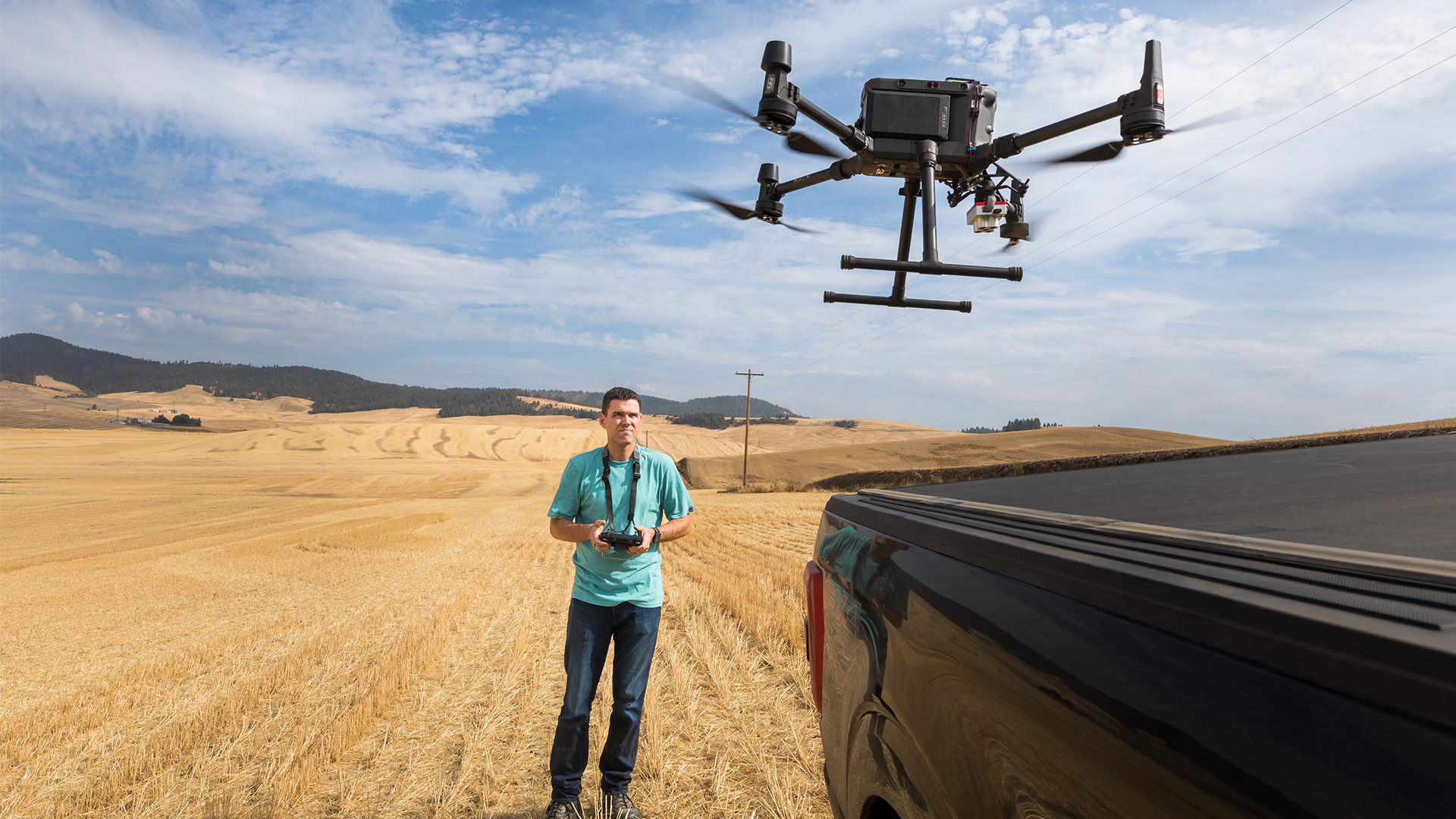
Microsoft has open-sourced its 'farm of the future' toolkit, aimed at enhancing agricultural productivity through AI-driven solutions. This toolkit includes various models and tools designed to optimize farming practices, making it accessible for developers and researchers to innovate in sustainable agriculture. The initiative is expected to impact farmers and agritech companies by providing advanced resources for precision farming.
Microsoft's decision to open-source its 'farm of the future' toolkit provides builders and PMs in the agritech sector with robust AI-driven resources to innovate in sustainable agriculture. This move signals a growing trend towards collaborative development in precision farming, potentially attracting investors looking for scalable solutions in the agricultural technology space.
Data and AI are set to revolutionize contact centers in financial services by enhancing customer experience and operational efficiency. Microsoft AI's advanced analytics and machine learning models enable personalized interactions, reducing average handling time by up to 30% and improving first contact resolution rates significantly. This transformation will directly impact customer satisfaction and retention in the financial sector.
The integration of Microsoft AI's advanced analytics in contact centers can reduce handling times by up to 30%, which is crucial for builders and PMs focused on operational efficiency. For investors, this signals a shift towards AI-driven solutions in financial services, indicating potential growth opportunities in companies that adopt these technologies to enhance customer satisfaction and retention.

AI-equipped drones are being utilized to monitor endangered dolphin populations, providing critical data for conservation efforts. These drones enhance research capabilities by capturing high-resolution imagery and tracking dolphin behavior, which is vital for understanding their decline. The initiative aims to inform strategies to protect these marine mammals from extinction.
The deployment of AI-equipped drones for monitoring endangered dolphin populations represents a significant advancement in conservation technology. Builders and PMs can leverage this approach to develop innovative solutions in wildlife monitoring, while investors may find opportunities in the growing intersection of AI and environmental sustainability.
An online math tutoring service leverages AI to enhance students' skills and confidence, utilizing advanced algorithms to personalize learning experiences. This service has shown significant improvements in student performance, with many reporting increased engagement and understanding of complex math concepts. The AI-driven approach aims to provide tailored support to learners, making math more accessible and enjoyable.
The development of AI-driven personalized learning in online math tutoring services signifies a shift towards adaptive education technology that can enhance student engagement and performance. For builders and PMs, this indicates a growing market opportunity in educational AI solutions, while investors may see potential for scalable business models in the edtech sector.

AI-Mimi is enhancing TV accessibility for Deaf and Hard of Hearing users in Japan by integrating AI-driven features that provide real-time captions and sign language interpretation. This initiative aims to create a more inclusive viewing experience, significantly benefiting over 1 million individuals in the country.
AI-Mimi's integration of AI-driven real-time captions and sign language interpretation for TV accessibility in Japan highlights a growing market need for inclusive technology. Builders and PMs should note the potential for scalable solutions in accessibility, while investors may see opportunities in a sector that addresses the needs of over 1 million Deaf and Hard of Hearing individuals.

Microsoft has introduced a comprehensive framework aimed at ensuring responsible AI system development, emphasizing ethical considerations and accountability. This framework includes guidelines for data usage, model training, and deployment strategies, targeting developers and organizations to foster trust in AI technologies. By prioritizing transparency and fairness, Microsoft seeks to mitigate risks associated with AI implementations.
Microsoft's introduction of a comprehensive framework for responsible AI development is significant for builders, PMs, and investors as it sets a standard for ethical practices in AI. This framework not only guides developers in creating trustworthy AI systems but also helps organizations mitigate risks, making investments in AI technologies more secure and aligned with societal values.
Singapore has launched Asia's first AI-based mobile app for identifying shark and ray fins, aimed at combating illegal wildlife trade. This innovative tool leverages machine learning to enhance conservation efforts and protect endangered species from poaching. The app is a significant step towards utilizing technology in wildlife protection.
The launch of Singapore's AI-based mobile app for shark and ray fin identification represents a significant development in conservation technology, providing builders and PMs with a model for integrating AI into wildlife protection. For investors, this innovation signals potential growth in the intersection of technology and environmental sustainability, highlighting opportunities in the conservation tech sector.

AI is set to revolutionize personal assistant devices and enhance sign language communication, with companies like Microsoft leading the charge. Innovations could improve accessibility for the hearing impaired, making technology more inclusive and user-friendly. The integration of AI in these devices promises to streamline interactions and provide real-time translation capabilities.
The integration of AI in personal assistant devices, as demonstrated by Microsoft's innovations, presents a significant opportunity for builders and PMs to enhance accessibility features, particularly for the hearing impaired. Investors should note that this shift towards inclusive technology could open new markets and drive demand for advanced communication tools.