AI news intelligence brief for builders, PMs and investors.
DeepSignal
Signal over Noise
DeepSignal is an AI-curated AI-news reader. We rank every story by signal, summarise the why, and ship a daily brief in your language and timezone.
- Per-article AI summary, Why-Featured rationale, and a 0–100 Signal Score.
- Bilingual EN / 中文 — the UI and every email, Slack, or Feishu brief.
- Daily brief delivered to email, Slack, or Feishu at your timezone and chosen hour.
- 8 verticals — models, agents, infra, hardware, robotics, security, policy, business.
- Save, like / dislike, share, and mute the sources you don't want.
Featured
Hand-picked by AI for high-signal AI news.
2h ago
FeaturedOriginal
Akshay 🚀 on X: "Karpathy's Agentic Engineering finally has proper tooling! (built by Google) Karpathy defined agentic engineering as the discipline that separates production agent work from vibe coding. The core skills he listed were spec design, eval loops, and security oversight. The https://t.co
AI Summary
Google's new Agents CLI streamlines agentic engineering by integrating seven ADK-specific skills into a single command, enhancing production workflows for coding agents. This tool addresses the fragmented tooling issue in agentic engineering, allowing for seamless scaffolding, evaluation, deployment, and enterprise registration through natural language. Akshay tested this by building a agent from scratch using Claude Code.
Why Featured
Google's new Agents CLI tool simplifies agentic engineering by combining multiple skills into a single command, which enhances production workflows for coding agents. This development is significant for builders and PMs as it streamlines the development process, reduces fragmentation, and improves efficiency in deploying AI agents, making it easier for investors to back projects with a clearer path to market.

3h ago
FeaturedOriginal
The Download: Anthropic launches Claude Science, and California’s carbon manure math
AI Summary
Anthropic has launched Claude Science, a new AI product aimed at enhancing scientific research, announced during an event for biotech and pharmaceutical leaders. This flagship model is designed to support complex data analysis and accelerate research processes in various scientific fields.
Why Featured
Anthropic's launch of Claude Science, an AI product focused on enhancing scientific research, signals a significant advancement in data analysis capabilities for biotech and pharmaceutical sectors. Builders and PMs should consider integrating such advanced AI tools into their workflows to improve research efficiency, while investors may find opportunities in companies leveraging this technology for innovation in drug development and scientific discovery.

1h ago
FeaturedOriginal
Gemini Spark, Google’s agentic assistant, is now available on Mac
AI Summary
Google's Gemini Spark, a 24/7 agentic assistant, is now available on Mac, enhancing user experience with real-time tracking and expanded app support. This launch signifies Google's commitment to integrating advanced AI capabilities into everyday computing, making it easier for Mac users to access intelligent assistance.
Why Featured
The launch of Google's Gemini Spark on Mac signifies a shift towards integrating AI-driven assistance into mainstream computing, which can inspire builders and PMs to develop more user-centric applications. For investors, this move highlights the growing market potential for AI solutions in everyday tasks, indicating a robust investment opportunity in AI-driven technologies.

5h ago
FeaturedOriginal
OpenAI paper reveals three GPT-5.6 Pro models, breaking with single top-tier strategy
AI Summary
OpenAI's latest benchmark paper indicates that the GPT-5.6 Pro tier will feature three distinct models, marking a significant shift from the previous single top-tier approach. This change is expected to enhance user options and performance metrics for ChatGPT Pro since its inception.
Why Featured
OpenAI's introduction of three distinct GPT-5.6 Pro models signals a shift from a single top-tier strategy, providing builders and PMs with more tailored options for specific applications. For investors, this diversification could lead to increased market competitiveness and potentially higher returns as developers leverage the enhanced capabilities to meet diverse user needs.

1h ago
FeaturedOriginal
LLMs are stuck in a groupthink groove. This startup is trying to get them out.
AI Summary
A startup aims to break the groupthink pattern in large language models (LLMs) like Claude and ChatGPT, which often yield repetitive outputs, such as consistently generating the number 7 when prompted for a random number. This issue highlights the limitations of LLMs in providing diverse responses, impacting user experience and application effectiveness.
Why Featured
The startup's initiative to address the groupthink issue in LLMs highlights a critical limitation in current AI models that can affect user engagement and application versatility. For builders and PMs, this development signals the need for more innovative approaches to enhance model diversity, while investors should recognize the potential for solutions that improve AI performance and user satisfaction.
Want this in your inbox every morning?
Daily brief at your local 8am — bilingual EN/中文, free.
Latest
Reverse chronological feed of all published articles.

46m ago
Copilot CLI auto model selection routes based on task
AI Summary
GitHub Copilot CLI now features auto model selection that intelligently routes to the most suitable model based on task requirements. This enhancement utilizes model health metrics and utilization data to ensure high quality, reliability, and token efficiency, improving user experience significantly.
Why Featured
The introduction of GitHub Copilot CLI's auto model selection enhances the development process by ensuring that builders and PMs can leverage the most suitable AI model for specific tasks, improving efficiency and reliability. For investors, this advancement signals a commitment to continuous improvement in AI tools, potentially leading to increased adoption and market competitiveness.
1h ago
FeaturedOriginal
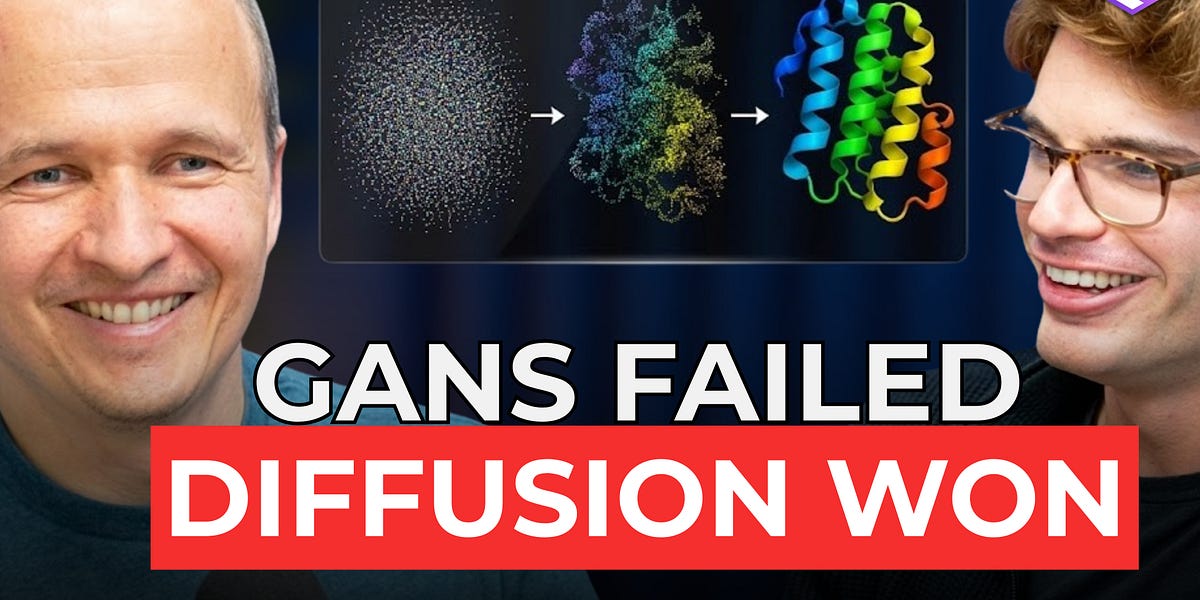
🔬 The Coolest Diffusion Research Isn't in LLMs — Evan Feinberg & Sergey Edunov, Genesis Molecular AI
AI Summary
Evan Feinberg's departure from Meta to Genesis Molecular AI highlights a shift towards drug discovery, emphasizing PEARL's zero-shot OpenBind success. The advancement in co-folding techniques is set to enhance accuracy, potentially revolutionizing molecular interactions and drug design.
Why Featured
Evan Feinberg's move to Genesis Molecular AI and the success of PEARL's zero-shot OpenBind in co-folding techniques signal a significant advancement in drug discovery. This development could lead to more accurate molecular interactions, presenting opportunities for builders and PMs to innovate in biotech and for investors to capitalize on emerging technologies in healthcare.
1h ago
FeaturedOriginal
LLMs are stuck in a groupthink groove. This startup is trying to get them out.
AI Summary
A startup aims to break the groupthink pattern in large language models (LLMs) like Claude and ChatGPT, which often yield repetitive outputs, such as consistently generating the number 7 when prompted for a random number. This issue highlights the limitations of LLMs in providing diverse responses, impacting user experience and application effectiveness.
Why Featured
The startup's initiative to address the groupthink issue in LLMs highlights a critical limitation in current AI models that can affect user engagement and application versatility. For builders and PMs, this development signals the need for more innovative approaches to enhance model diversity, while investors should recognize the potential for solutions that improve AI performance and user satisfaction.

1h ago
FeaturedOriginal
Venice AI becomes a unicorn with $65M Series A as its privacy-first AI platform takes off
AI Summary
Venice AI has achieved unicorn status with a $65 million Series A funding round, driven by its profitable privacy-first AI platform, which boasts annualized revenues exceeding $70 million, according to CEO Erik Voorhees.
Why Featured
Venice AI's $65 million Series A funding and its unicorn status signal strong market demand for privacy-first AI solutions, highlighting a growing trend among consumers and businesses prioritizing data privacy. This development presents an opportunity for builders and PMs to innovate in privacy-centric applications and for investors to capitalize on a lucrative and expanding niche in the AI landscape.
1h ago
FeaturedOriginal
Gemini Spark, Google’s agentic assistant, is now available on Mac
AI Summary
Google's Gemini Spark, a 24/7 agentic assistant, is now available on Mac, enhancing user experience with real-time tracking and expanded app support. This launch signifies Google's commitment to integrating advanced AI capabilities into everyday computing, making it easier for Mac users to access intelligent assistance.
Why Featured
The launch of Google's Gemini Spark on Mac signifies a shift towards integrating AI-driven assistance into mainstream computing, which can inspire builders and PMs to develop more user-centric applications. For investors, this move highlights the growing market potential for AI solutions in everyday tasks, indicating a robust investment opportunity in AI-driven technologies.

1h ago
Presentation: Graph : Building Smarter Retrieval Workflows with Knowledge Graphs
AI Summary
Cassie Shum highlights the limitations of traditional vector RAG in handling global context and multi-hop reasoning. She advocates for the use of semantically structured knowledge graphs to enhance AI workflows by shifting logic to the data layer, underscoring the importance of robust data foundations.
Why Featured
The presentation on Graph RAG emphasizes the limitations of traditional vector retrieval augmented generation (RAG) and suggests using knowledge graphs for improved multi-hop reasoning. This matters to builders and PMs as it highlights the need for robust data foundations to enhance AI workflows, while investors should note the potential for more effective AI applications that leverage structured data for better decision-making.

2h ago
FeaturedOriginal
Meta, like SpaceX, looks to turn excess AI compute into cash
AI Summary
Meta is launching a cloud infrastructure service to monetize its AI compute capabilities, directly competing with AWS, Google Cloud, and Microsoft Azure. This initiative aims to leverage its excess AI resources, potentially reshaping the cloud market landscape and impacting existing providers.
Why Featured
Meta's launch of a cloud infrastructure service to monetize its AI compute capabilities signals increased competition in the cloud market, potentially driving down costs for builders and PMs while offering new opportunities for investors in AI-driven cloud solutions. This move may compel existing providers to innovate and enhance their offerings to retain market share.

3h ago
FeaturedOriginal
Your site, your rules: new AI traffic options for all customers
AI Summary
Cloudflare introduces enhanced AI traffic management options for website owners, allowing them to differentiate between Search, Agent, and Training bots. This update also enables protection for ad-monetized pages, moving beyond a one-size-fits-all approach.
Why Featured
Cloudflare's introduction of enhanced AI traffic management options allows website owners to differentiate between various types of bots, which can lead to more effective monetization strategies and improved site performance. This development signals a shift towards tailored solutions in web traffic management, making it crucial for builders, PMs, and investors to adapt their strategies accordingly.

3h ago
FeaturedOriginal
Making AI search smarter
AI Summary
Cloudflare AI introduces two initiatives aimed at enhancing AI search capabilities, addressing the challenges creators face in maintaining visibility and monetizing their work in an increasingly agentic environment. These initiatives are designed to help creators navigate the evolving landscape of digital discovery and compensation.
Why Featured
Cloudflare AI's introduction of initiatives to enhance AI search capabilities is significant for builders and PMs as it addresses the critical challenge of content visibility and monetization for creators. This development signals a shift towards more effective digital discovery tools, which could influence product strategies and investment opportunities in the AI-driven content space.
3h ago
FeaturedOriginal
Content Independence Day, one year on: building the business model for the agentic Internet
AI Summary
One year post-Content Independence Day, a monetized content market is thriving, driven by autonomous AI agents disrupting traditional search methods. This report outlines the necessary infrastructure for a sustainable web economy, highlighting the shift in content monetization strategies.
Why Featured
The emergence of a monetized content market driven by autonomous AI agents signifies a fundamental shift in content monetization strategies, presenting new opportunities for builders and PMs to innovate in infrastructure development. Investors should note this trend as it indicates a growing demand for sustainable web economies, potentially leading to lucrative investment avenues in AI-driven platforms.
3h ago
FeaturedOriginal
The Download: Anthropic launches Claude Science, and California’s carbon manure math
AI Summary
Anthropic has launched Claude Science, a new AI product aimed at enhancing scientific research, announced during an event for biotech and pharmaceutical leaders. This flagship model is designed to support complex data analysis and accelerate research processes in various scientific fields.
Why Featured
Anthropic's launch of Claude Science, an AI product focused on enhancing scientific research, signals a significant advancement in data analysis capabilities for biotech and pharmaceutical sectors. Builders and PMs should consider integrating such advanced AI tools into their workflows to improve research efficiency, while investors may find opportunities in companies leveraging this technology for innovation in drug development and scientific discovery.

4h ago
FeaturedOriginal
Hidden code in Claude Code secretly flagged Chinese users
AI Summary
Anthropic is discontinuing a hidden monitoring feature in its Claude Code tool that flagged Chinese users, following significant backlash on social media. This decision highlights growing concerns over privacy and surveillance in AI tools, particularly regarding user data handling.
Why Featured
Anthropic's decision to discontinue the hidden monitoring feature in Claude Code that flagged Chinese users underscores the critical importance of user privacy and ethical data handling in AI development. Builders and PMs must prioritize transparency to avoid backlash and ensure compliance with global privacy standards, while investors should consider the reputational risks associated with surveillance practices in AI tools.

4h ago
FeaturedOriginal
Claude Sonnet 5 continues Anthropic's pattern of hiding price increases behind unchanged token rates
AI Summary
Claude Sonnet 5, ranking fifth in the AI Analysis Intelligence Index, consumes 40% more tokens per task than its predecessor, leading to hidden cost increases despite unchanged list prices from Anthropic. This trend of concealing price hikes behind token rates is becoming a pattern for the company.
Why Featured
The release of Claude Sonnet 5, which consumes 40% more tokens per task while maintaining the same list prices, signals a hidden cost increase for developers and product managers relying on this model. Investors should be aware of this trend, as it may affect profit margins and user adoption due to rising operational costs.

InfoQ AI, ML & Data Engineering·Simerus Mahesh, Alex Infanzon, Meryem Arik, Luca Bianchi, Renato Losio
5h ago FeaturedOriginal
Presentation: The Infrastructure Challenge Behind Production AI
AI Summary
The panelists highlight that while AI model development is advancing, the challenge lies in maintaining reliable production databases under pressure. They emphasize the need for architectural decisions that distinguish scalable teams from those prone to outages, urging engineering leaders to rethink their strategies.
Why Featured
The discussion on the infrastructure challenges in maintaining reliable production databases highlights the critical need for scalable architectural strategies in AI development. Builders and PMs must prioritize robust engineering practices to prevent outages, while investors should recognize the importance of infrastructure resilience as a key factor in the long-term viability of AI projects.

Reddit 上爆出大猛料,Claude 为何封号中国用户又快又准?
AI Summary
Anthropic's Claude Code has been found to include a spyware mechanism targeting Chinese users, enabling precise account bans. This hidden program, undetected until recently, uses steganography and code obfuscation to identify and track users without consent, raising significant privacy concerns.
Why Featured
The discovery of a spyware mechanism in Anthropic's Claude Code that targets Chinese users for account bans raises serious privacy concerns and highlights the potential for misuse of AI technologies. Builders and PMs need to consider ethical implications and compliance with privacy regulations, while investors should assess the risks associated with companies that may engage in such practices.
5h ago
FeaturedOriginal
OpenAI paper reveals three GPT-5.6 Pro models, breaking with single top-tier strategy
AI Summary
OpenAI's latest benchmark paper indicates that the GPT-5.6 Pro tier will feature three distinct models, marking a significant shift from the previous single top-tier approach. This change is expected to enhance user options and performance metrics for ChatGPT Pro since its inception.
Why Featured
OpenAI's introduction of three distinct GPT-5.6 Pro models signals a shift from a single top-tier strategy, providing builders and PMs with more tailored options for specific applications. For investors, this diversification could lead to increased market competitiveness and potentially higher returns as developers leverage the enhanced capabilities to meet diverse user needs.

感知、控制与数据:ICRA 2026 中国企业报告的三个交汇点
AI Summary
At ICRA 2026, six Chinese companies showcased advancements in robotics, focusing on perception, control, and data integration. Notable innovations include Suoteng's RGB-D integration for spatial intelligence, Pacini's tactile sensors for dexterous manipulation, and ZhiYuan's pre-trained model τ0-WM, enhancing operational accuracy from 60%-70% to 95%. These developments signal a shift towards practical engineering solutions in robotics.
Why Featured
The advancements showcased at ICRA 2026, particularly ZhiYuan's pre-trained model τ0-WM that boosts operational accuracy from 60%-70% to 95%, indicate a significant leap in robotics capabilities. This enhances the potential for builders and PMs to implement more reliable robotics solutions, while investors should note the increasing viability of robotics applications in various industries.

走访 ICRA 30+中国企业,我们发现具身智能产业三大趋势 | ICRA 2026
AI Summary
ICRA 2026 showcased China's advancements in embodied intelligence, highlighting trends like full-stack integration, data collection as a competitive edge, and dexterous hands mimicking human capabilities. Companies like Qianxun and ZhiYuan demonstrated innovative models and data collection systems, emphasizing the industry's shift towards comprehensive solutions.
Why Featured
The showcase of embodied intelligence advancements at ICRA 2026, particularly the emphasis on full-stack integration and innovative data collection systems by companies like Qianxun and ZhiYuan, signals a shift towards comprehensive solutions in robotics. Builders and PMs should consider how these trends can enhance product development, while investors may see opportunities in companies that leverage data as a competitive edge.

英伟达为什么选了 Sharpa 的手?ICRA 2026现场我们找到了答案
AI Summary
NVIDIA's choice of Sharpa's dexterous hand for the Isaac GR00T robot is driven by its 1:1 human hand design, featuring 22 degrees of freedom and over 1000 tactile sensors, enhancing robotic dexterity and data-driven model training. Sharpa's innovations in tactile sensing and data collection position it as a full-stack robotics company, aiming for a closed-loop system of hardware and algorithms.
Why Featured
NVIDIA's integration of Sharpa's dexterous hand into the Isaac GR00T robot highlights a significant advancement in robotic dexterity and sensory feedback, crucial for developing more capable and adaptive robotic systems. This development signals opportunities for builders and PMs to innovate in robotics applications, while investors may see potential in Sharpa's full-stack approach to robotics and its implications for future market growth.

独家丨世界模型企业知天下完成天使轮融资,要做「中国版World Labs」
AI Summary
Zhitianxia, a startup focused on 3D Gaussian Splatting (3DGS), has secured angel funding from Shanghai Zhonghe Venture Capital to enhance its generative model development. With a growing user base and a data set surpassing UK's SuperSplat, the company aims to establish a Chinese counterpart to World Labs, advancing AI's understanding of 3D physical spaces.
Why Featured
Zhitianxia's successful angel funding for its generative model development in 3D Gaussian Splatting signals a growing investment interest in advanced AI technologies focused on 3D physical spaces. Builders and PMs should note this trend as it indicates potential market opportunities and competition in the generative AI landscape, particularly in the Chinese market.

8h ago
FeaturedOriginal
Anthropic's Fable 5 is back worldwide after a two-week government ban over a jailbreak
AI Summary
Anthropic's Fable 5 is back in global circulation after a two-week U.S. government ban due to a jailbreak exploit discovered by Amazon researchers. While a new safety classifier mitigates over 99% of such exploits, it inadvertently flags benign requests, raising concerns about user experience.
Why Featured
Anthropic's Fable 5 has resumed global availability after a two-week ban due to a jailbreak exploit. The introduction of a new safety classifier, while effective in mitigating risks, raises concerns about user experience by flagging benign requests, signaling to builders and PMs the need for balancing safety and usability in AI products.

10h ago
Unmasking the crawls with Attribution Business Insights
AI Summary
Cloudflare's Attribution Business Insights dashboard provides website owners with detailed insights into crawler behavior and value, facilitating discussions on crawl compensation. This tool aims to enhance understanding of how crawlers interact with websites, ultimately benefiting business strategies.
Why Featured
Cloudflare's Attribution Business Insights dashboard offers detailed insights into crawler behavior, which allows website owners to better understand the value of crawlers and negotiate compensation. This development is crucial for builders and PMs as it informs strategies for optimizing web traffic and monetization, while investors can assess the potential for improved ROI in web-based businesses.

11h ago
FeaturedOriginal
AIEWF Daily Dispatch: Loops, Software Factories & Forward Deployed Engineers
AI Summary
At the AI Engineer World's Fair, discussions centered on the rise of software factories and agent engineering, highlighting the importance of open models in enhancing development efficiency. The event showcased innovative approaches to loops in AI, emphasizing their role in optimizing software production and deployment.
Why Featured
The discussions at the AI Engineer World's Fair on software factories and agent engineering signal a shift towards more efficient development processes. Builders and PMs should consider adopting open models and innovative looping techniques to streamline production, while investors may see opportunities in companies that leverage these advancements for competitive advantage.
12h ago
FeaturedOriginal
Indi-RomCoM: Code-Mixed Benchmark for Evaluating LLMs on Romanized Indic-English Instructions
AI Summary
The Indi-RomCoM benchmark evaluates LLMs on Romanized Code-Mixed instructions, revealing significant performance drops, especially as code-mixing density increases. LLMs, including proprietary and open-weight models, consistently struggle with RCM tasks, highlighting the need for improved multilingual systems.
Why Featured
The Indi-RomCoM benchmark reveals that current LLMs struggle with code-mixed instructions, indicating a significant gap in their multilingual capabilities. Builders and PMs should focus on developing more robust models for diverse language interactions, while investors may see opportunities in startups addressing this unmet need in the AI language space.
12h ago
FeaturedOriginal
A Three-Phase Foundation Model for Tax-Aware Personalized Portfolio Management
AI Summary
This paper introduces a three-phase deep reinforcement learning model for personalized portfolio management, addressing ticker lock-in, monolithic objectives, and static user models. It employs a T5-based time series model for asset encoding, a Mixture of Experts architecture for diverse investment goals, and a personalized inference layer using transaction history, marking a significant advancement in financial AI applications.
Why Featured
The introduction of a three-phase deep reinforcement learning model for personalized portfolio management represents a significant advancement in financial AI, allowing for more tailored investment strategies that adapt to individual user behaviors and goals. This could lead to improved investment performance and customer satisfaction, making it a critical development for builders and PMs in the fintech space, as well as for investors seeking more effective portfolio management tools.
·