Daily Brief
Today's AI brief, summarized in minutes.
DeepSignal — 2026-07-30
Today's 20 highest-signal stories across 5 verticals, curated by DeepSignal.
Finalised. Subscribers will receive this shortly.
20 stories5 verticals
Today's Highlights
10 highlights- 01Ontologies Are So Back: Why AI Agents Are Reviving the Semantic Web
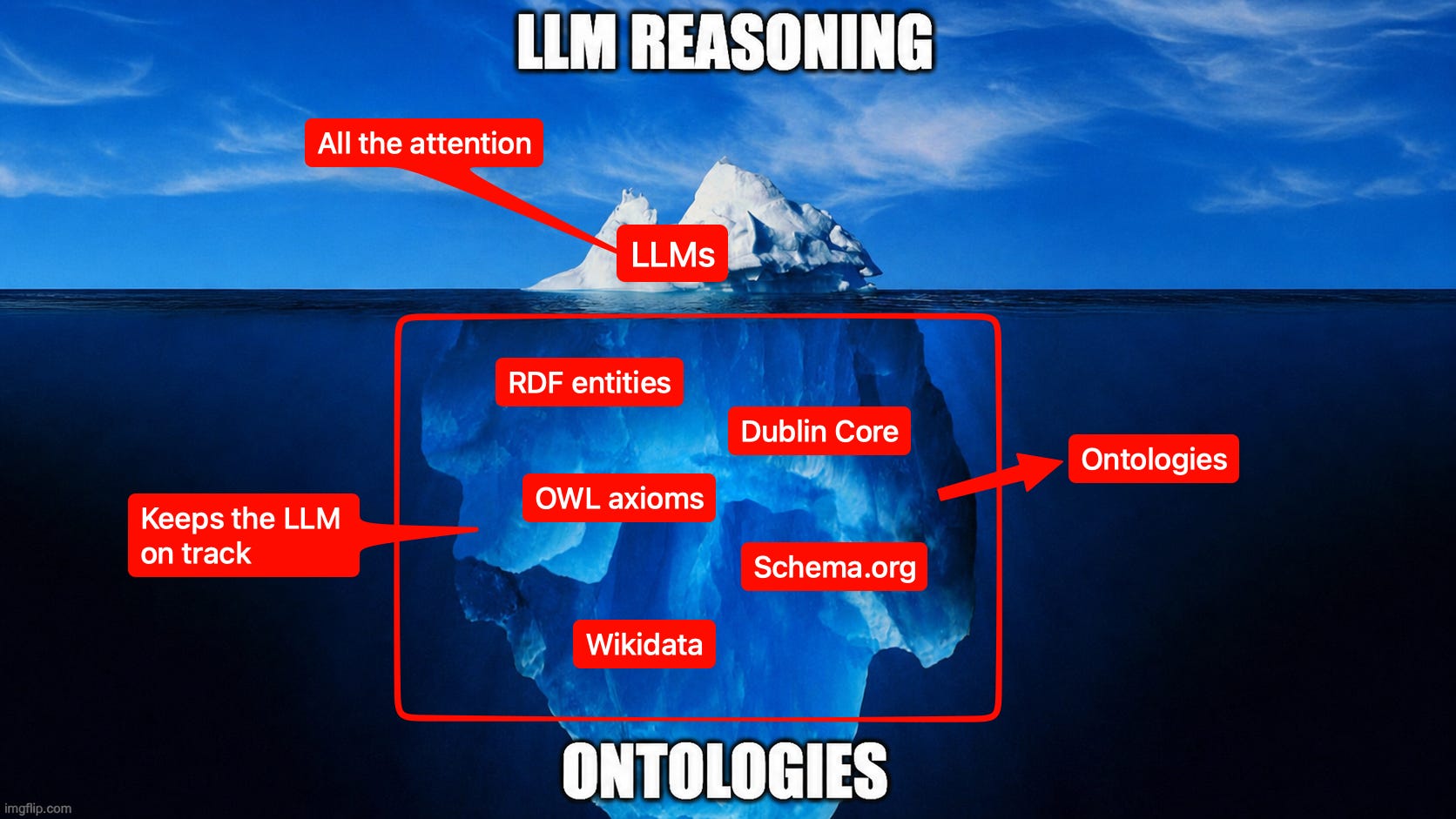 Frank Coyle at AIEWF 2026 emphasized the revival of ontologies as essential 'logical guardrails' for effective AI agents, integrating them with LLMs for better reasoning. Neo4j's Emil Eifrem highlighted three ontology types to enhance agent scalability, while Kingsley Idehen discussed the challenges and benefits of maintaining ontologies in AI systems.
 - 02
Dexory has integrated SimScale’s Engineering AI to enhance warehouse robotics development by automating simulation workflows and expediting engineering analysis. This initiative aims to identify where AI can add the most value in mechanical engineering, ultimately reducing product development cycles in a rapidly growing market projected to reach $117 billion by 2034.
Today by Vertical
5 verticalsHardware
Recent analyses highlight the critical role of configuration in AI infrastructure performance, with NVIDIA revealing that choices can lead to 8%-12% performance gaps in identical systems, as discussed in NVIDIA Exemplar Cloud: Lessons for Unlocking Full Performance on AI Infrastructure. Meanwhile, advancements in lightweight image classification for edge devices, utilizing models like EfficientNet-B0, demonstrate significant improvements in processing speed and accuracy, as detailed in Lightweight Image Classification of Raptor Species for Edge Devices. Additionally, the deployment of large-scale models like Kimi K3 on AWS underscores the need for high-end GPU infrastructure, while the issue of idle GPUs presents a growing constraint in AI operations, paralleling the challenges faced in aviation, as explored in GPU Management: Why Idle GPUs Are the New Grounded Aircraft. This indicates that optimizing infrastructure and resource utilization is essential for builders and investors aiming to enhance AI capabilities efficiently.
Security
Microsoft's recent positioning as a competitor to OpenAI and Anthropic highlights the importance of internal AI models, as emphasized by CEO Satya Nadella, who warns against the risks of data leaks and vendor lock-in associated with external models, particularly following incidents like the one involving Hugging Face (TechCrunch). This sentiment is echoed in the healthcare sector, where a federated physics-informed neural network (PINN) has been developed to model brain tumors while preserving patient privacy, achieving notable accuracy improvements (arXiv). In the realm of cybersecurity, Okta's acquisition of AI security startup Permiso for approximately $200 million reflects the increasing demand for robust monitoring in cloud environments as businesses integrate AI (TechCrunch). Similarly, Inforcer's recent funding round aims to bolster support for small and medium businesses facing AI and cybersecurity threats, indicating a growing market for security solutions tailored to these challenges (TechCrunch). For builders and investors, these developments underscore the critical need for innovative security measures in an increasingly AI-driven landscape.
Today's Observations
7 observations- AI agents need robust ontologies for better reasoning; builders must invest in ontology frameworks to enhance LLM integration. [1]
- Warehouse robotics market projected to hit $117 billion by 2034; operators should adopt AI-enhanced engineering to reduce product cycles. [2]
- GitHub Copilot's new features improve coding workflows; developers should leverage these tools for enhanced collaboration and efficiency. [3]
- Configuration choices can impact AI training performance by 8%-12%; investors must prioritize infrastructure optimization for better ROI. [4]
- Local LLMs lag behind dedicated MT systems; operators should evaluate their translation strategies to ensure quality across languages. [5]
- AI security is critical; Okta's $200M acquisition of Permiso highlights the need for robust monitoring in cloud environments. [16]
- Idle GPUs are a major constraint; enterprises must optimize GPU utilization to avoid inefficiencies and maximize computational power. [18]
Featured
6 stories7/30/2026
FeaturedOriginal
Ontologies Are So Back: Why AI Agents Are Reviving the Semantic Web
AI Summary
Frank Coyle at AIEWF 2026 emphasized the revival of ontologies as essential 'logical guardrails' for effective AI agents, integrating them with for better reasoning. Neo4j's Emil Eifrem highlighted three ontology types to enhance agent scalability, while Kingsley Idehen discussed the challenges and benefits of maintaining ontologies in AI systems.
Why Featured
The revival of ontologies as 'logical guardrails' for AI agents, as discussed at AIEWF 2026, signals a shift towards more structured and scalable AI systems. Builders and PMs should consider integrating these frameworks to enhance reasoning capabilities in their applications, while investors may find opportunities in companies focused on ontology development for AI scalability.
References
20 articles- 01Ontologies Are So Back: Why AI Agents Are Reviving the Semantic Web— Latent Space
- 02— Robotics Tomorrow
- 03GitHub Copilot in Visual Studio — July update— GitHub Copilot Changelog
- 04NVIDIA Exemplar Cloud: Lessons for Unlocking Full Performance on AI Infrastructure— NVIDIA Developer Blog
- 05Evaluating Prompt Scope and Demonstration Similarity in Local LLM Machine Translation— arXiv cs.CL
- 06