Daily Brief
Today's AI brief, summarized in minutes.
DeepSignal — 2026-10-15
Today's 20 highest-signal stories across 5 verticals, curated by DeepSignal.
Finalised. Subscribers will receive this shortly.
20 stories5 verticals
Today's Highlights
10 highlights- 01Volvo makes a bigger bet on Nvidia
 Volvo expands its partnership with Nvidia to enhance its automated driving systems, integrating Nvidia's Hyperion architecture and Alpamayo software stack in future vehicles. This collaboration aims to standardize safety and sensor technology across all Volvo models, not just EVs, with the first vehicle debuting within the decade.
 - 02Nvidia's Nemotron 3.5 Super VL is an open model built to run enterprise AI agents nonstop
Nvidia's Nemotron 3.5 Super VL, a 120 billion parameter open multimodal model, excels in enterprise AI tasks, outperforming its predecessor with faster processing and higher accuracy in various benchmarks. Two compact Bolt models are also introduced for local deployment, enhancing AI capabilities on edge devices.
Today by Vertical
5 verticalsHardware
Volvo is significantly enhancing its automated driving systems through an expanded partnership with Nvidia, integrating the latter's Hyperion architecture and Alpamayo software stack across all vehicle models, not just electric ones, with the first vehicle expected to debut within the decade as reported by TechCrunch. Concurrently, Nvidia has introduced the Nemotron 3.5 Super VL, a 120 billion-parameter open multimodal model that demonstrates superior performance in enterprise AI tasks and offers local deployment options through compact Bolt models, as detailed in The Decoder and NVIDIA Developer Blog. This model significantly enhances specialized workflows, achieving up to 5x higher throughput and a 40x reduction in inference costs. The advancements in AI capabilities, particularly with the introduction of Meta's Muse Spark Open, which optimizes coding workflows on Nvidia hardware, further underscore the push towards more efficient and powerful AI systems, as highlighted in NVIDIA Developer Blog and MarkTechPost. What this means for builders/investors is a clear trend towards integrated AI solutions that enhance operational efficiency across various sectors.
Robotics
Rivian is advancing its electric vehicles by integrating third-party AI agents, as highlighted by CEO RJ Scaringe, who emphasized the potential for these systems to access complex AI models while maintaining safety in operations, which could significantly enhance user interactions beyond the existing in-house AI assistant. Concurrently, MassRobotics is opening applications for its Healthcare Robotics Catalyst Program Cohort 6, designed to support startups in healthcare robotics through mentorship from industry leaders like Intel and Festo. This initiative, running from February to June 2027, aims to accelerate innovation in the sector, with applications closing on December 31, 2026. What this means for builders/investors is the growing intersection of AI and robotics, presenting new opportunities for advancements in both automotive and healthcare applications.
Today's Observations
7 observations- Volvo's Nvidia partnership standardizes safety tech across all models, impacting future vehicle design and safety regulations. Builders should align with these standards.
- Nvidia's Nemotron 3.5 Super VL, with 120B parameters, boosts enterprise AI efficiency by 5x. Operators must leverage this for cost-effective AI deployment.
- OpenAI's GPT-Rosalind offers free access to academic labs, fostering collaboration in life sciences. Investors should monitor emerging research applications.
- Meta's Muse Spark Open achieves 50K tokens/sec on NVIDIA GB300 NVL72, enhancing coding workflows. Developers should adopt this for competitive advantage.
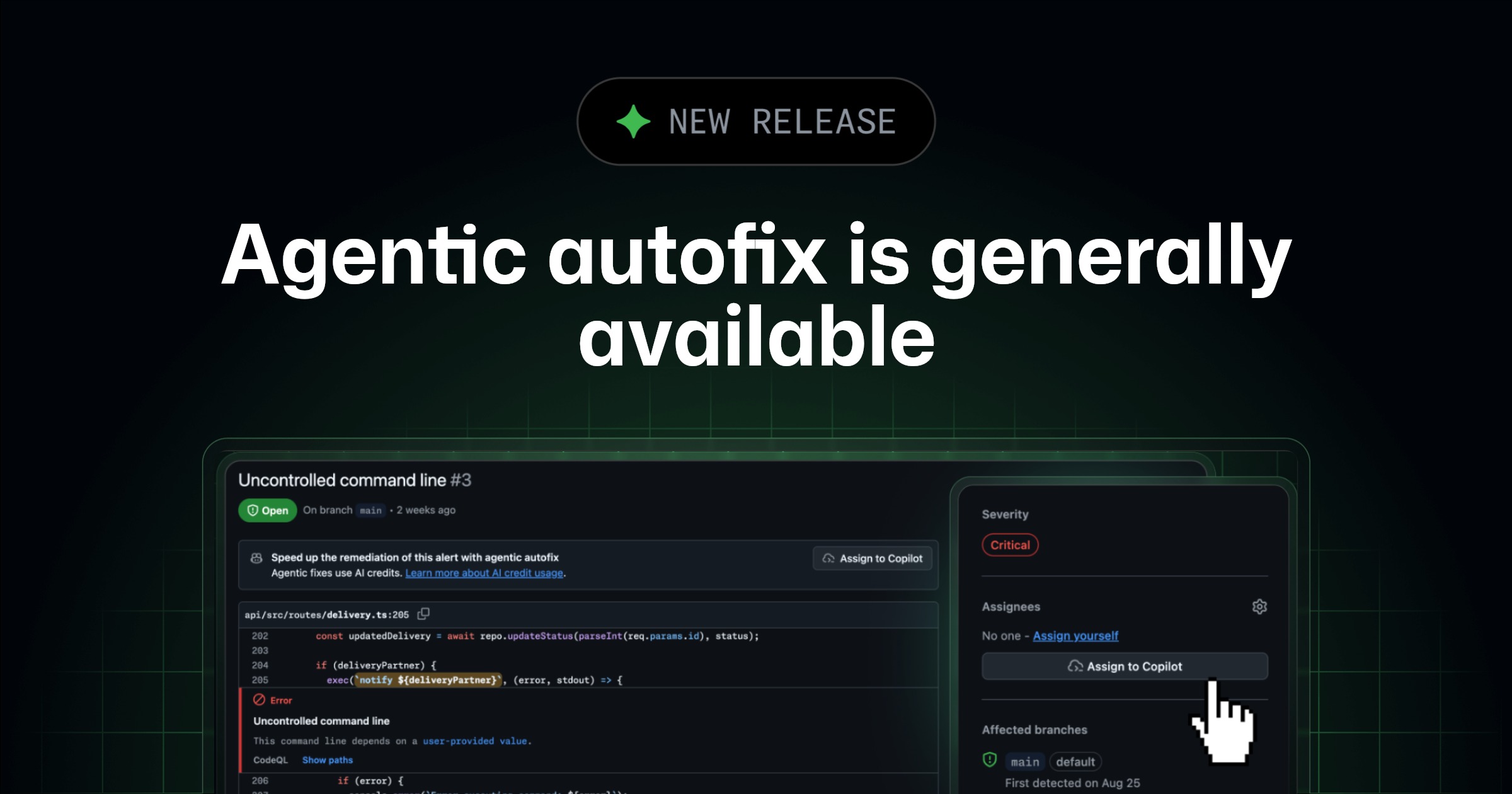
- GitHub's Agentic autofix automates code remediation, saving time for security teams. Operators must integrate this to streamline security processes.
- Rivian's integration of third-party AI agents enhances user experience in EVs. Builders should explore partnerships to enhance vehicle functionalities.
- MassRobotics' Healthcare Robotics Catalyst Program offers mentorship for startups, crucial for investors seeking innovation in healthcare automation.
Featured
6 stories14h ago
FeaturedOriginal
Volvo makes a bigger bet on Nvidia
AI Summary
Volvo expands its partnership with Nvidia to enhance its automated driving systems, integrating Nvidia's Hyperion architecture and Alpamayo software stack in future vehicles. This collaboration aims to standardize safety and sensor technology across all Volvo models, not just EVs, with the first vehicle debuting within the decade.
Why Featured
Volvo's expanded partnership with Nvidia to integrate its Hyperion architecture and Alpamayo software stack across all models signals a shift towards standardized automated driving technology. Builders and PMs should note the implications for development timelines and safety protocols, while investors may see this as a strategic move to enhance competitive positioning in the automotive market.
References
20 articles- 01Volvo makes a bigger bet on Nvidia— TechCrunch
- 02Nvidia's Nemotron 3.5 Super VL is an open model built to run enterprise AI agents nonstop— The Decoder
- 03Bringing GPT-Rosalind to academic research labs— OpenAI Blog
- 04NVIDIA Nemotron 3.5 Super VL Powers Specialized Agents with Multimodal Reasoning— NVIDIA Developer Blog
- 05Scale Agentic Coding Workflows with Meta’s Muse Spark Open on NVIDIA GB300 NVL72— NVIDIA Developer Blog
- 06