DeepSignal
© 2026 DeepSignal · About
  • All
  • Featured
  • Latest
  • Guides
  • Daily
  • Weekly
  • Saved
  • Subscribe
  • Sources
  • About
  • Feedback
Sign in
  • Featured
  • Latest
  • Guides
  • Daily
  • Weekly

    Daily Brief

    Today's AI brief, summarized in minutes.

    Subscribe
    2026-07-182026-07-172026-07-162026-07-152026-07-142026-07-132026-07-122026-07-112026-07-102026-07-09

    DeepSignal — 2026-07-17

    Today's 20 highest-signal stories across 5 verticals, curated by DeepSignal.

    Finalised. Subscribers will receive this shortly.
    20 stories5 verticals
    Top stories
    1. Why the first GPU financiers are turning to inference chips in a $400 million dealSignal 86
    2. ToolAnchor: Anchoring Counterfactual Context to Boost Agentic Tool-use CapabilitySignal 85
    3. AI Agents Do Not Fail Alone:The Context Fails FirstSignal 84
    Key companies
    Copilot, GitHub, OpenAI
    Key topics
    Research, LLM, AI Coding, Agent, Inference
    Why it matters
    Today's AI news clusters around Research, LLM, AI Coding, with major signals from Copilot, GitHub, OpenAI, showing where model, tooling, and infrastructure shifts are shaping product decisions.

    Today's Highlights

    10 highlights
    1. 01Why the first GPU financiers are turning to inference chips in a $400 million deal

      General Compute secured a $400 million loan from Upper90, using inference-specific chips as collateral, signaling a shift towards cost-effective AI infrastructure. Their SN50 chips promise 16x faster inference than traditional GPU clouds, highlighting a growing market for open-source AI models and alternatives to Nvidia.

    2. 02ToolAnchor: Anchoring Counterfactual Context to Boost Agentic Tool-use Capability

      ToolAnchor introduces a framework that enhances agentic tool-use in AI by overcoming behavioral inertia through counterfactual contexts. This method enables large language model agents to adapt to new tools effectively, demonstrating competitive performance across tasks like GAIA and BrowseComp. The approach bridges static post-training and dynamic adaptation, paving the way for scalable reinforcement learning.

    Today by Vertical

    5 verticals

    Hardware

    Recent developments in the hardware sector highlight a significant shift towards more efficient AI infrastructure. General Compute's $400 million loan from Upper90, secured against their SN50 inference chips, underscores the growing demand for alternatives to traditional GPUs, promising 16 times faster inference speeds and catering to the rise of open-source AI models (TechCrunch). Meanwhile, advancements in surface reconstruction techniques, such as the G2SR model, demonstrate the potential for lightweight neural approaches to achieve high geometric accuracy without heavy computational requirements (arXiv cs.CV). Additionally, Valar Atomics is exploring the deployment of small modular nuclear reactors for data centers, indicating a convergence of energy solutions with AI infrastructure needs (TechCrunch). For builders and investors, these trends signal opportunities in developing cost-effective and sustainable AI solutions.

    Robotics

    Recent advancements in robotics emphasize the integration of vision and cognitive models to enhance autonomous systems. The study on SeeSE3 reveals that self-supervised vision models can effectively represent 3D Euclidean space properties, introducing 'Latent-Space Navigation' techniques that improve visual odometry and localization without explicit 3D reconstruction, as discussed in this article. Complementing this, Chat2Scenic presents an iterative framework for generating autonomous driving scenarios, achieving notable success rates and outperforming traditional methods, which is crucial for safe navigation in diverse environments, highlighted in this article. Furthermore, RxBrain combines language-visual reasoning with physical task execution, showcasing potential for real-time robot action generation, as detailed in this article. Collectively, these innovations indicate a trend toward more intelligent, adaptable robotic systems, offering valuable insights for builders and investors in the field.

    Today's Observations

    7 observations
    • General Compute's $400M loan for inference chips signals a shift to cost-effective AI infrastructure, crucial for investors eyeing alternatives to Nvidia. [1]
    • ToolAnchor's framework enhances AI adaptability, vital for enterprises needing dynamic tool integration to stay competitive. [2]
    • ProofAgent-Harness shows that context quality predicts AI agent performance, highlighting the need for better contextual training in AI startups. [3]
    • GitHub Copilot's new features improve code review security and customization, essential for developers managing complex environments. [4]
    • OpenAI's GPT-5.6 achieves 72.7% 'Useful Intelligence per Dollar,' a key metric for CFOs optimizing AI investment efficiency. [5]
    • Polestar's improvements in dLLM inference efficiency set new benchmarks, indicating a competitive edge for startups focused on performance. [10]
    • Traccia's governance platform addresses compliance with EU AI regulations, critical for operators managing autonomous AI systems. [15]

    Featured

    6 stories
    Why the first GPU financiers are turning to inference chips in a $400 million deal
    TechCrunch
    TechCrunch·Tim Fernholz
    16h ago
    FeaturedOriginal

    Why the first GPU financiers are turning to inference chips in a $400 million deal

    AI Summary

    General Compute secured a $400 million loan from Upper90, using inference-specific chips as collateral, signaling a shift towards cost-effective AI infrastructure. Their SN50 chips promise 16x faster inference than traditional GPU clouds, highlighting a growing market for open-source AI models and alternatives to Nvidia.

    Why Featured

    The $400 million loan secured by General Compute for inference-specific chips indicates a significant shift towards more efficient AI infrastructure, which could lower operational costs for builders and PMs. This development highlights the growing viability of alternatives to Nvidia, suggesting that investors should consider diversifying into companies focused on innovative chip technologies.

    #Inference#GPU#Open Source#Funding
    4

    References

    20 articles
    1. 01Why the first GPU financiers are turning to inference chips in a $400 million deal— TechCrunch
    2. 02ToolAnchor: Anchoring Counterfactual Context to Boost Agentic Tool-use Capability— arXiv cs.AI
    3. 03AI Agents Do Not Fail Alone:The Context Fails First— arXiv cs.AI
    4. 04Copilot code review: Customization and configurability improvements— GitHub Copilot Changelog
    5. 05A scorecard for the AI age— OpenAI Blog
    6. 06
  1. 03AI Agents Do Not Fail Alone:The Context Fails First

    The paper emphasizes that AI agents' failures are rooted in weak context rather than isolated issues. It introduces ProofAgent-Harness, an open-source tool for evaluating AI agents based on seven context criteria, demonstrating that context quality significantly predicts behavioral outcomes such as hallucination resistance and instruction adherence.

  2. 04Copilot code review: Customization and configurability improvements

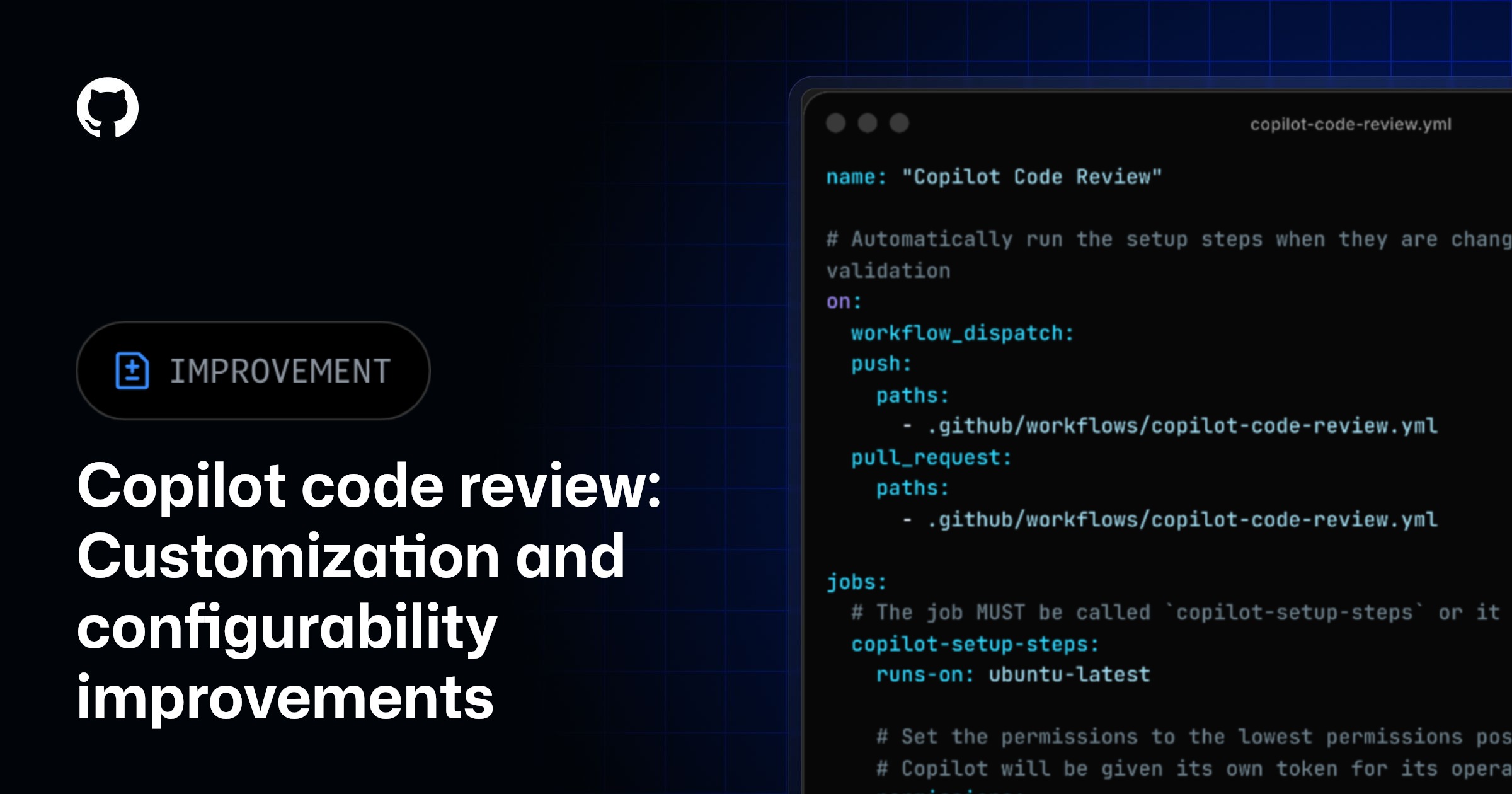
    GitHub Copilot code review introduces enhanced customization with head branch instruction reading, expanded file support, and firewall functionality, giving developers more control over their review processes. Administrators can now configure environments using a copilot-code-review.yml file, while firewall settings ensure secure reviews by default.

  3. 05A scorecard for the AI age

    OpenAI's GPT-5.6 model family aims to optimize AI spending by measuring 'Useful Intelligence per Dollar,' achieving a new benchmark of 72.7% in engineering tasks while reducing output token costs by 36.2%. This approach emphasizes task completion efficiency and dependability, crucial for CFOs seeking value from AI investments.

  4. 06Information-Theoretic Limits of Reliability and Scaling in Language Models

    This paper reveals that large language models (LLMs) face an information-theoretic reliability ceiling based on output uncertainty and task ambiguity. The authors derive a scaling law that links model performance to the limitations of training data and model capacity, providing insights into when scaling improves reliability and unifying various phenomena in generative models.

  5. 07MemoHarness: Agent Harnesses That Learn from Experience

    MemoHarness is an adaptive optimization framework for agent harnesses that learns from execution experiences, improving performance over static configurations in benchmarks like shell-agent and code generation. It utilizes a dual-layer experience bank to adapt harnesses without needing test-time labels, showing selective transfer to unseen tasks while remaining cost-effective.

  6. 08Automatic Hard Example Synthesis with Multi-Level Agentic Data Curation

    This paper introduces an automated red-teaming framework for Multimodal Large Language Models (MLLMs) that synthesizes hard examples to enhance content safety. By leveraging a multi-agent system, the approach reduces the False Negative Rate from 41.2% to 24.5% in a public image safety benchmark without human labeling, addressing vulnerabilities to adversarial attacks.

  7. 09Tracing LLM Behavior to the Training Data with Empirical Next-Token Distributions

    This study investigates the alignment between an LLM's next-token distribution and the empirical next-token distribution (ENTD) from its training data. Findings reveal that while many inputs show high agreement, significant discrepancies exist for certain sequences, prompting a call for more research into data-centric mechanistic interpretability.

  8. 10Polestar: Drift-Aware Cache Calibration and Token Commitment for Efficient Inference of Diffusion LLMs

    Polestar introduces a training-free inference framework that enhances diffusion large language models (dLLMs) by addressing token representation drift. It achieves up to 10.73% accuracy improvement and 3.7x higher throughput, setting new benchmarks in efficiency and decoding parallelism.

  9. Security

    Recent developments in security tools highlight significant advancements in content safety and review processes. GitHub Copilot has enhanced its code review capabilities, allowing for more customization and secure environments through a new configuration file and firewall settings, as detailed in this update. Concurrently, research on automated red-teaming frameworks for Multimodal Large Language Models (MLLMs) demonstrates a reduction in the False Negative Rate for content safety, showcasing the effectiveness of a multi-agent approach in addressing vulnerabilities (arXiv paper). Additionally, the LBA method introduces a novel way to generate adversarial texts efficiently, outperforming existing techniques and enhancing the robustness of language models (arXiv study). These innovations suggest that builders and investors should prioritize security features in their development pipelines to mitigate risks effectively.

    Policy

    Recent developments in AI governance and evaluation highlight the importance of context and compliance in ensuring effective AI systems. The introduction of ProofAgent-Harness, an open-source tool that assesses AI agents based on contextual criteria, emphasizes that failures often stem from weak context rather than isolated issues, as discussed in this article. Concurrently, OpenAI's GPT-5.6 model family aims to optimize AI investments by measuring 'Useful Intelligence per Dollar,' achieving significant reductions in costs while enhancing task efficiency, as noted in this article. Additionally, the Traccia platform addresses compliance gaps in AI systems, integrating telemetry data to enhance alignment with EU regulations, which is crucial for managing autonomous systems effectively, as outlined in this article. Together, these insights underscore the necessity for robust evaluation frameworks and compliance mechanisms in AI development, informing builders and investors about the critical factors for successful AI deployment.

    Papers

    Recent advancements in AI frameworks are focusing on enhancing the performance and adaptability of large language models (LLMs). The ToolAnchor framework addresses behavioral inertia by leveraging counterfactual contexts, allowing LLMs to effectively adapt to new tools and demonstrating competitive performance in tasks such as GAIA and BrowseComp. Meanwhile, the study on Information-Theoretic Limits reveals a reliability ceiling for LLMs, linking performance to training data limitations. Additionally, MemoHarness introduces an adaptive optimization method that enhances agent performance through experiential learning. These developments underscore a trend towards more efficient and reliable AI systems, which is crucial for builders and investors aiming to leverage advanced AI capabilities in practical applications.

    arXiv cs.AI
    arXiv cs.AI·Weiting Liu, Jieyi Bi, Wanqi Zhou, Jianfeng Feng, Yining Ma, Ai Han, Wenlian Lu
    1d ago
    FeaturedOriginal

    ToolAnchor: Anchoring Counterfactual Context to Boost Agentic Capability

    AI Summary

    ToolAnchor introduces a framework that enhances agentic tool-use in AI by overcoming behavioral inertia through counterfactual contexts. This method enables large language model agents to adapt to new tools effectively, demonstrating competitive performance across tasks like GAIA and BrowseComp. The approach bridges static post-training and dynamic adaptation, paving the way for scalable reinforcement learning.

    Why Featured

    The introduction of ToolAnchor enhances agentic tool-use in AI by allowing large language models to adapt dynamically to new tools, which can significantly improve their performance across various tasks. This development signals a shift towards more scalable reinforcement learning methods, making it crucial for builders and PMs to consider how these advancements can be integrated into their products for better user experiences.

    #LLM#Agent#AI Coding#Enterprise AI
    4
    arXiv cs.AI
    arXiv cs.AI·Fouad Bousetouane
    1d ago
    FeaturedOriginal

    AI Agents Do Not Fail Alone:The Context Fails First

    AI Summary

    The paper emphasizes that AI agents' failures are rooted in weak context rather than isolated issues. It introduces ProofAgent-Harness, an open-source tool for evaluating AI agents based on seven context criteria, demonstrating that context quality significantly predicts behavioral outcomes such as hallucination resistance and instruction adherence.

    Why Featured

    The introduction of ProofAgent-Harness as a tool for evaluating AI agents highlights the importance of context quality in AI performance. Builders and PMs should focus on improving contextual frameworks to enhance AI reliability, while investors can identify opportunities in tools that address these foundational issues, potentially reducing risks associated with AI deployment.

    #Agent#Open Source#AI Startup#Policy
    3
    Copilot code review: Customization and configurability improvements
    GitHub Copilot Changelog
    GitHub Copilot Changelog·Allison
    7h ago
    Original

    Copilot code review: Customization and configurability improvements

    AI Summary

    GitHub Copilot code review introduces enhanced customization with head branch instruction reading, expanded file support, and firewall functionality, giving developers more control over their review processes. Administrators can now configure environments using a copilot-code-review.yml file, while firewall settings ensure secure reviews by default.

    Why Featured

    The introduction of enhanced customization in GitHub Copilot's code review, including the ability to configure environments with a copilot-code-review.yml file and improved firewall settings, allows builders and PMs to tailor the review process to their specific needs, enhancing productivity and security. For investors, this signals a commitment to continuous improvement in developer tools, potentially increasing user adoption and retention.

    #AI Coding#Open Source#Security
    3
    OpenAI Blog
    OpenAI Blog
    18h ago
    FeaturedOriginal

    A scorecard for the AI age

    AI Summary

    OpenAI's GPT-5.6 model family aims to optimize AI spending by measuring 'Useful Intelligence per Dollar,' achieving a new benchmark of 72.7% in engineering tasks while reducing output token costs by 36.2%. This approach emphasizes task completion efficiency and dependability, crucial for CFOs seeking value from AI investments.

    Why Featured

    OpenAI's introduction of the GPT-5.6 model family, which optimizes AI spending by measuring 'Useful Intelligence per Dollar' and achieving a 72.7% benchmark in engineering tasks, signals a shift towards efficiency in AI investments. Builders and PMs can leverage this model to enhance productivity while investors can assess AI solutions based on their cost-effectiveness and reliability.

    #LLM#AI Assistant#Enterprise AI#Policy
    5
    arXiv cs.CL
    arXiv cs.CL·Subhabrata Majumdar
    1d ago
    FeaturedOriginal

    Information-Theoretic Limits of Reliability and Scaling in Language Models

    AI Summary

    This paper reveals that large language models (LLMs) face an information-theoretic reliability ceiling based on output uncertainty and task ambiguity. The authors derive a scaling law that links model performance to the limitations of training data and model capacity, providing insights into when scaling improves reliability and unifying various phenomena in generative models.

    Why Featured

    The paper identifies an information-theoretic ceiling on the reliability of large language models, indicating that simply scaling these models may not yield proportional improvements in performance. Builders and PMs should consider these limitations when designing applications, while investors need to assess the sustainability of scaling strategies in their funding decisions.

    #LLM#AI Coding#Inference
    1
    Information-Theoretic Limits of Reliability and Scaling in Language Models
    — arXiv cs.CL
  10. 07MemoHarness: Agent Harnesses That Learn from Experience— arXiv cs.AI
  11. 08Automatic Hard Example Synthesis with Multi-Level Agentic Data Curation— arXiv cs.AI
  12. 09Tracing LLM Behavior to the Training Data with Empirical Next-Token Distributions— arXiv cs.AI
  13. 10Polestar: Drift-Aware Cache Calibration and Token Commitment for Efficient Inference of Diffusion LLMs— arXiv cs.CL
  14. 11SeeSE3: Emergence of 3D Space in Vision Features— arXiv cs.CV
  15. 12CoEvoT: Co-Evolving Chain-of-Thought Prompting for Graph-LLM Reasoning— arXiv cs.CL
  16. 13LBA: Textual Hard-Label Adversarial Attack under Low Query Budgets— arXiv cs.CL
  17. 14G$^2$SR: Geometric Methods for Fast and Memory-Efficient Gaussian-based Surface Reconstruction— arXiv cs.CV
  18. 15Traccia: An OpenTelemetry-Based Governance Platform for AI Systems— arXiv cs.AI
  19. 16Chat2Scenic: An Iterative RAG-Based Framework for Scenario Generation in Autonomous Driving— arXiv cs.AI
  20. 17RxBrain: Embodied Cognition Foundation Model with Joint Language-Visual Reasoning and Imagination— arXiv cs.AI
  21. 18Semantic Register Compression in Multi-Agent LLM Cascades— arXiv cs.CL
  22. 193D Geometric Tooth Alignment Planning via Deep Reinforcement Learning— arXiv cs.CV
  23. 20Nuclear startup Valar Atomics in talks to raise new funding at $6B valuation— TechCrunch